
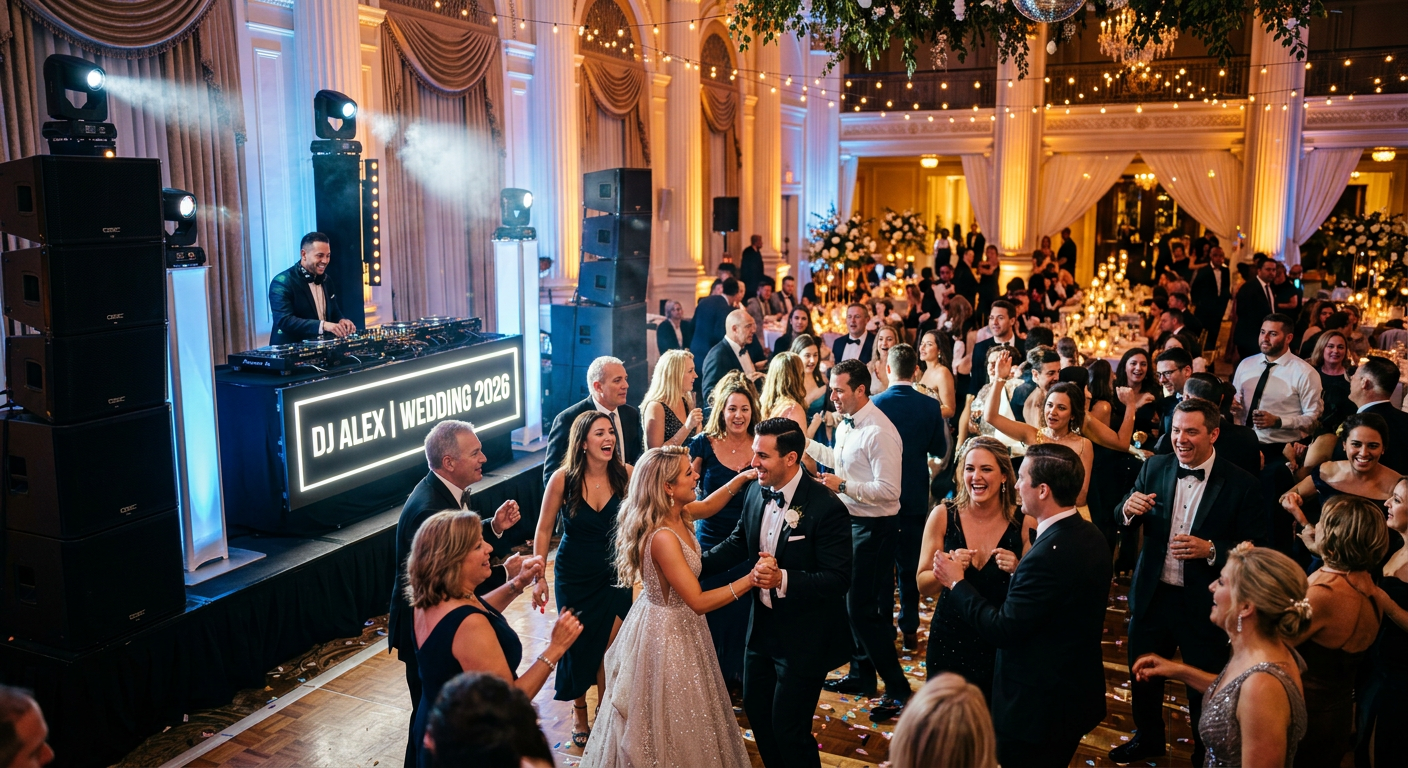
Selecting the right soundtrack for your big day is one of the most critical decisions in the planning process, as music serves as the heartbeat of the entire celebration. When considering wedding DJ hire, the goal is to create a seamless sonic journey that transitions from the formal requirements of your ceremony and drinks reception through to the high-energy dance floor moments of the evening. With the 2026 wedding season approaching, couples are increasingly looking for ways to balance timeless classics with modern chart-toppers to keep guests of all ages engaged.
Quick Summary
Creating the perfect atmosphere for your wedding reception requires a balanced approach to musical curation, prioritising guest demographics and personal sentiment. By blending classic anthems with contemporary hits, you can build energy throughout the night, ensuring a packed dance floor and a memorable experience for everyone in attendance.
- Prioritise a “Must play” list for essential sentimental tracks.
- Utilise “Don’t play” lists to maintain your desired musical identity.
- Focus on pacing to build dance floor momentum.
- Balance personal favourites with crowd-pleasing anthems.
Table of Contents
- 1. Creating the Perfect Atmosphere with Wedding DJ Songs
- 2. The Strategic Importance of Playlists
- 3. Managing Tempo for Dance Floor Flow
- 4. Integrating Timeless Classics
- 5. Incorporating Current 2026 Chart Hits
- 6. The Role of Personalisation and Guest Requests
- 7. Professional Equipment and Venue Considerations
1. Creating the Perfect Atmosphere with Wedding DJ Songs
Choosing the right wedding DJ songs is about more than just picking a list of tracks you enjoy; it is about orchestrating an emotional arc for your event. An effective selection acknowledges the different phases of the day, from the welcoming ambiance of the drinks reception to the crescendo of the final dance. A professional approach often involves filtering songs that resonate with your specific identity as a couple while ensuring the music remains accessible to your guests.
In the UK, many couples are opting for a mix of acoustic versions of pop songs for earlier segments, transitioning into upbeat soul, funk, and modern dance tracks as the evening progresses. By focusing on the atmosphere you wish to evoke, you allow your entertainment to complement the venue’s architecture and your overall event theme, ensuring the music never feels out of place or disjointed.
2. The Strategic Importance of Playlists
Developing a well-structured playlist is essential when you look into wedding DJ packages, as these services often rely on client input to set the right tone. A successful curation strategy typically involves categorising your music into distinct phases: arrival, dinner, and dancing. This segmentation prevents the “radio station effect,” where songs jump haphazardly between genres without a logical progression.
Beyond just the songs themselves, the strategy involves collaboration. You should provide your performer with clear guidance, including ‘Must play’ lists for key moments and ‘Don’t play’ lists to avoid tracks that don’t align with your personal style. This collaborative effort ensures that the event hosting services are tailored to your specific preferences rather than a generic template used for every event.
3. Managing Tempo for Dance Floor Flow
Tempo management is the unsung hero of a great reception. If the beat is too slow for too long, the energy in the room can dip; conversely, jumping straight into high-BPM tracks before guests have had time to settle in can feel forced. Expert curation involves building the tempo gradually throughout the night, allowing for peaks and troughs that give guests time to refresh before the next high-energy block.
Real-world impact is significant when you get the pacing right. By using professional event lighting to mirror the shift in music tempo, you create a visual and auditory environment that naturally encourages guests to the dance floor. This rhythmic planning is often the difference between a static room and a vibrant, energetic celebration that lasts well into the night.
4. Integrating Timeless Classics
Every wedding benefits from the inclusion of floor-filling classics that transcend generations. Whether it is Motown hits, 80s pop anthems, or 90s dance floor staples, these tracks provide a familiar touchpoint for all guests, regardless of age. Integrating these songs correctly prevents the playlist from becoming too niche or focused entirely on the couple’s personal music taste.
Why this matters: Inclusion is key to a successful reception. When older relatives hear a track from their youth, they are far more likely to join the festivities. When you choose a wedding DJ hire service that understands how to intersperse these classics with more modern tracks, you ensure the dance floor remains occupied by a diverse cross-section of your guest list throughout the event.
5. Incorporating Current 2026 Chart Hits
While classics are the foundation, modern hits provide a current, vibrant feel to the evening. Staying updated with the 2026 charts ensures your event feels contemporary and fresh. However, the key is selectivity; not every chart-topper will suit the atmosphere of a wedding reception. A professional will test the waters with popular tracks to see how the crowd responds, adjusting the flow based on live feedback.
Real-world application: If you have a younger crowd, don’t be afraid to suggest the latest trending tracks, but ensure they are played at the right moment. Mixing these with known favourites keeps the night feeling current without alienating guests who aren’t familiar with the latest music trends. This balance is what separates a truly customised experience from a standard, off-the-shelf DJ set.
6. The Role of Personalisation and Guest Requests
Guest requests are a double-edged sword that require professional management. While you want your guests to feel involved, allowing open requests can sometimes disrupt the carefully crafted energy of the night. A great strategy is to set boundaries early – perhaps allowing requests within specific genres or giving your guests a chance to contribute to a pre-event playlist submission.
This level of personalisation extends to how you approach your audio guestbook or other interactive elements. When guests feel their musical tastes are represented – even if it is just through one or two requested songs – they become more invested in the success of the party. A skilled DJ acts as a filter, taking those requests and weaving them into the set at the optimal moment, rather than stopping the flow of music to accommodate a request that might kill the mood.
7. Professional Equipment and Venue Considerations
Music curation is only as effective as the hardware used to deliver it. High-quality sound systems, correctly balanced for the size of your venue, are non-negotiable. Whether you are holding your reception in a rustic barn or a modern hotel ballroom, the acoustics will vary significantly. A professional DJ will adapt their sound output to suit the specific room, preventing audio distortion and ensuring the music is clear in all corners of the venue.
Furthermore, consider the physical footprint of your setup. In smaller venues, compact, modern equipment – often including selfiepod booths or integrated lighting – ensures the space remains functional for guests while still delivering a massive sonic impact. By investing in the right setup, you ensure that the effort you put into choosing your songs is actually realised in the quality of the sound heard by your guests.
FAQ
How far in advance should I finalise my wedding playlist?
It is recommended to have your core ‘Must play’ and ‘Don’t play’ lists finalised at least four to six weeks before your event. This allows your DJ to cross-reference your choices with their library and plan the transitions.
Should I provide a full playlist for the entire night?
While it is helpful to provide a list of songs you love, it is best to provide a selection of 20-30 tracks and let the professional read the room. A static, pre-planned list often fails to account for the live energy of the crowd.
How do I handle musical disagreements between partners?
Use the ‘Must play’ and ‘Don’t play’ lists as a compromise tool. If one partner hates a specific genre, it goes on the ‘Don’t play’ list, while both partners can select an equal number of ‘Must play’ tracks to ensure both identities are represented.
What if the dance floor is empty?
Professional DJs have specific techniques, such as tempo adjustments or genre shifts, to re-energise a room. Having a reliable, experienced DJ is the best insurance against an empty dance floor.


Pingback: How to Build Your 2026 Reception Playlist: Selecting the Best Wedding DJ Songs – JP the DJ