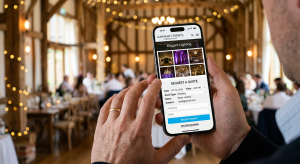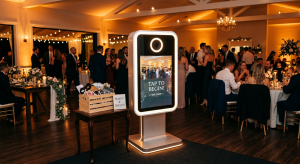
Picture a venue coordinator at 11 PM, staring at a floor plan for a tight marquee reception. They need to approve an evening entertainment package, but your site only shows a gallery of laughing guests. There are no dimensions for your unit, no mention of the required power draw, and no visible link to your Public Liability Insurance. They close the tab and tell the client to find a different supplier. Building a high-converting photobooth website is rarely about having the most striking visual portfolio. It is about stripping away the friction of logistics, compliance, and availability so that venues and clients can confidently proceed with the booking.
Quick Summary
A high-converting photobooth website is a digital operational asset that translates raw visitor traffic into confirmed event bookings by preemptively answering logistical, technical, and spatial questions. It functions effectively by prioritising clear availability calendars, explicit physical footprint specifications, and immediate access to compliance documentation rather than relying solely on aesthetic galleries.
- Structure landing pages to serve corporate planners and wedding couples separately.
- List the exact spatial footprint, load-in requirements, and power draw explicitly.
- Provide immediate access to £10m PLI and PAT test certificates for venue coordinators.
- Use frictionless availability checking instead of manual, asynchronous contact forms.
Table of Contents
- 1. Site Hierarchy
- Separate audiences to prevent cognitive overload
- 2. Spatial Specifications
- Embed exact operational footprints on every booking page
- 3. Availability Systems
- Replace generic contact forms with definitive calendar systems
- 4. Compliance Visibility
- Surface documentation immediately to bypass venue friction
- 5. Operational Logistics
- Detail the physical workflow to protect sequential dependencies
- Common Pitfalls & Troubleshooting
- FAQ
- Recommended Reads
1. Site Hierarchy
Separate audiences to prevent cognitive overload
Corporate event planners and wedding couples buy fundamentally different outcomes. A corporate planner searches for VAT invoicing capabilities, white-label hardware that can be branded, data compliance for digital image captures, and distinct brand activation metrics. A wedding couple searches for aesthetic backdrops, custom memory books, and early set-up times that do not interrupt their speeches.
When a site forces both audiences through the same generic homepage and mixed gallery, it creates immediate friction. The corporate client assumes the service is too informal or lacks B2B infrastructure, while the wedding couple feels alienated by corporate branding jargon and rigid commercial terms.
Understanding proper site structure for these platforms requires building distinct, isolated landing pages for each core audience from the moment they arrive. Navigation must aggressively filter traffic based on intent. B2B traffic must route to pages detailing data security, custom vinyl wrapping, and automated BACS payment workflows. Private event traffic must route to timeline management, prop curation, and aesthetic template choices.
The most common failure mode here is the “Everything Catch-All” services page. By attempting to list every possible use case – from 60th birthdays to major corporate product launches – in a single scrolling layout, the provider forces the user to hunt for relevant information. Planners operating on tight deadlines do not hunt; they simply abandon the page.
2. Spatial Specifications
Embed exact operational footprints on every booking page
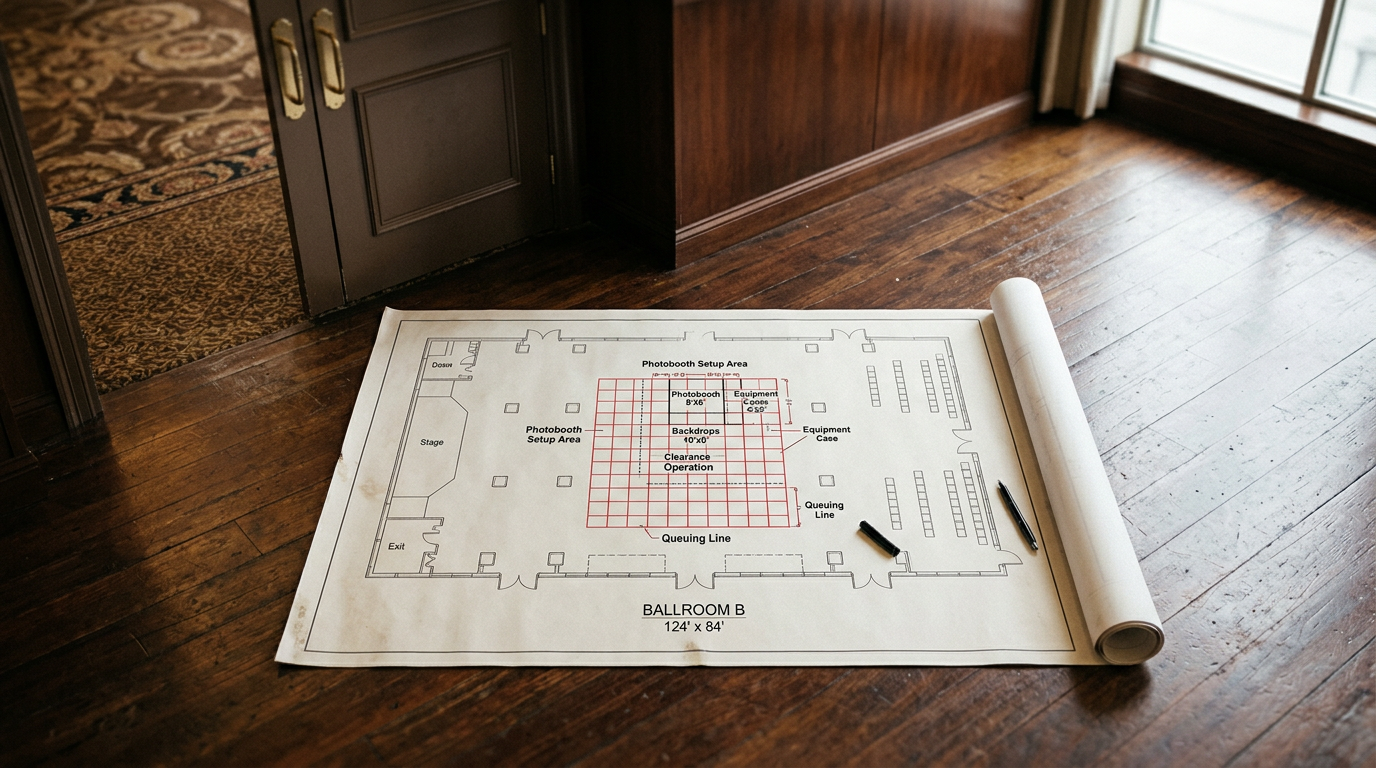
Venues are the hidden gatekeepers of the event industry. Even if a client loves your service, a venue duty manager will veto the booking on the day if they cannot safely accommodate the hardware. Modern setups range from highly compact digital pods to expansive enclosed structures with heavy backdrop rigs.
Your digital presence must explicitly list the physical realities of the hire. This includes required floor space. For example, you might need a flat 2×2 metre surface. Include minimum ceiling heights for ring flashes or tower units. State the exact distance required to a dedicated 13-amp socket. Historic venues in regions like Aberdeenshire often feature uneven flagstone floors or strict fire-exit buffer zones. This means “compact footprint” is not a usable metric for a coordinator. Furthermore, you must define the access requirements. Heavy flight cases cannot be dragged across 100 metres of loose gravel.
Practical rule: If a venue manager cannot find your exact equipment dimensions and power requirements within two clicks, the client will book a competitor to avoid the administrative headache.
When evaluating platform features for your digital presence, ensure technical specifications sit permanently above the booking fold. Do not bury them in a generic FAQ. The persistent mistake operators make is relying entirely on styled photographs to convey scale. A client will look at a picture and assume it fits in a narrow alcove near the bar. They proceed with the booking. This creates a severe operational crisis when the physical unit arrives and blocks a fire exit.
3. Availability Systems
Replace generic contact forms with definitive calendar systems
Booking momentum is fragile. When a client has decided to hire a service, their primary question transitions immediately from “Is this good?” to “Are they free on my date?” The psychological relief of crossing a task off a planning checklist is a powerful driver of conversion.
Relying on a static contact form that asks for a name, email, and date introduces a critical delay. The client submits the form, waits up to 48 hours for a manual check against a diary, and in the meantime, they enquire with three other providers. The first business to definitively answer the availability question usually wins the contract.
Clients researching reliable event hire sourcing methods will abandon a site that forces them into asynchronous email chains. The mechanics of a high-converting setup rely on API-linked availability calendars that read directly from your operational CRM. While you do not need to allow instant, unvetted bookings, the user must receive immediate algorithmic feedback indicating whether their date is open, waitlisted, or fully booked.
The recurring mistake is treating the booking page as a lead-generation trap rather than an operational tool. Forcing users to surrender their phone number just to find out if you are available on a specific Saturday in June destroys trust and drastically lowers the final conversion rate.
4. Compliance Visibility
Surface documentation immediately to bypass venue friction
Professional event hire is heavily regulated by venue insurance policies. A premium venue will not allow third-party electronic equipment onto their premises without proof of current Portable Appliance Testing (PAT) and substantial Public Liability Insurance (typically a minimum of £10m in the UK market).
These documents are non-negotiable, yet the majority of operators hide them. They wait for the venue to ask the client, who then emails the operator, who then replies with a PDF attachment. This introduces entirely avoidable friction into the client’s planning process and frustrates the venue coordinator.
Those comparing rental options for their upcoming occasions often look for transparent professionalism. To achieve this, build a dedicated, public-facing “Venue Documents” page. Link to it directly from the main navigation and the footer. Provide current, dated PDF links to your PLI certificate, generic risk assessments, and a statement on PAT testing schedules.
The critical failure mode is treating compliance as a post-sale administrative task. When a duty manager has to chase you for paperwork two weeks before the event, they actively advise their clients against booking your business for future events. Making this information public removes the client from the administrative crossfire entirely.
5. Operational Logistics
Detail the physical workflow to protect sequential dependencies
Events operate on strict, sequential timelines. The setup of one supplier directly impacts the performance of another. If a mobile disco is primed for the evening reception and a room is turned over for dinner, rolling heavy flight cases through the dancefloor at 7:30 PM ruins the atmosphere and disrupts the audio environment.
A converting site must explain exactly how load-in, operation, and breakdown function in reality. Reviewing the full scope of additional event services available can clarify how these timelines overlap. You must clearly define the difference between “Active Hours” (when the unit is running) and “Idle Hours” (when the unit is set up early to avoid disruption but not yet in use).
Mechanically, your pricing or package matrix must include early setup options as standard line items. It must explicitly state how long the load-in takes – for example, noting that a seamless setup requires 45 minutes of unimpeded access to the designated floor space. Idle hours must be priced to reflect the operational waiting time a 5 PM load-in incurs for an 8 PM start.
The mistake operators make is selling a “three-hour hire” without defining the boundaries of that time. Clients will naturally assume you arrive exactly when the three hours begin, leading to panicked venue coordinators and severely compromised event transitions. Establishing these rules upfront sets professional boundaries and justifies premium pricing.
Common Pitfalls & Troubleshooting
Diagnosing why a site fails to secure bookings requires looking past aesthetics and examining the operational bottlenecks that frustrate users.
- The Asynchronous Email Trap (Most Common Cause):
- Symptom: You receive steady, high-quality traffic, but your enquiry form yields zero submissions.
- Diagnosis: The barrier to entry is too high. Users do not want to fill out ten mandatory fields just to ask if a date is free. They are experiencing fatigue from planning an event and want instant answers.
-
Fix: Strip the contact form down to a simple, automated date-checker. If the date is free, only then request their name and email to hold the slot.
-
The Unbounded Travel Radius:
- Symptom: You receive plenty of booking requests, but they are entirely unprofitable due to excessive travel distances.
- Diagnosis: Your site fails to establish geographic boundaries, operating under the assumption that more leads are always better.
-
Fix: Implement a post-code checker before the booking widget, or explicitly map out your standard coverage area and the precise mileage fee for locations beyond it.
-
The Blank Canvas Template Trap:
- Symptom: Clients spend weeks trapped in endless back-and-forth email chains regarding the design of their print templates or digital overlays.
- Diagnosis: You have offered them total creative control without providing parameters. A blank canvas paralyzes clients who are not designers.
-
Fix: Remove the promise of “fully custom designs” from the sales copy. Replace it with a constrained visual matrix of 6 to 10 highly polished, pre-set layouts that clients can simply select and minimally tweak.
-
The B2B Payment Blockade:
- Symptom: Corporate clients express strong interest, complete the consultation, but abandon the process at the deposit stage.
- Diagnosis: You are forcing corporate accounting departments to pay a deposit via a consumer credit card gateway rather than generating a proper VAT invoice for a BACS transfer.
- Fix: Separate the B2B checkout flow. Allow corporate users to bypass the immediate credit card requirement in favour of an automated, downloadable BACS invoice with strict payment terms.
FAQ
Should pricing be listed publicly on the site?
Yes. Hiding pricing behind an enquiry wall generates low-quality leads and frustrates planners operating on strict budgets. Publicly listing a starting price or a distinct package matrix qualifies your traffic immediately, ensuring that by the time a client reaches out, they have already accepted your financial baseline.
How important is page load speed for event suppliers?
It is a critical conversion factor, especially because most event planning occurs on mobile devices during evening hours. Sites overloaded with uncompressed galleries of past events will stall. You must compress image assets and defer loading off-screen videos to ensure the initial booking widget renders instantly.
What is the safest way to handle GDPR for digital captures?
If your hardware captures and instantly texts or emails digital files to guests, your site must host a dedicated privacy policy explaining data retention. You must explicitly state how long images are stored on your servers before deletion, and this policy should be linked at the footer of every page.
How do I manage inventory if I own multiple different hardware units?
Do not list them as a generic cluster of services. Treat each piece of hardware as a distinct product with its own dedicated landing page, unique spatial requirements, and specific use-case recommendations. This prevents clients from booking a heavy, enclosed unit for a venue that can only accommodate a lightweight digital pod.