Picture the moment at 8:15 PM in a Highland estate marquee: the evening caterers plug a commercial hot water urn into the nearest wall socket, immediately tripping the circuit breaker that powers the primary PA system and the architectural room uplighting. The venue is plunged into silence and darkness just as the first speech begins. This is not a failure of the catering staff or the lighting technicians; it is a fundamental failure of oversight. Effective event management focuses far less on selecting napkin colours and far more on mapping the electrical load, calculating turnaround dependencies, and foreseeing exactly where independent suppliers will inevitably collide. When coordinating large-scale gatherings, ensuring a flawless execution requires shifting your focus from aesthetic choices to strict technical and temporal coordination.
Quick Summary
Professional event management for large-scale gatherings is the structural discipline of aligning independent supplier timelines, technical requirements, and spatial logistics into a single operational framework. It replaces fragmented communication with centralised oversight, ensuring that technical setups, catering schedules, and venue constraints do not conflict during execution.
- Centralises supplier coordination to eliminate cascading delays throughout the day.
- Maps venue infrastructure against the combined technical load of all independent providers.
- Defines absolute contractual boundaries for room turnaround times and loading logistics.
- Protects the client from mediating real-time disputes between overlapping vendors.
Table of Contents
- Where sequential dependency in event management breaks down first
- Why capacity planning outweighs aesthetic design
- The hidden cost of isolated supplier contracts
- How room turnaround times dictate technical infrastructure
- Comparing oversight frameworks for large gatherings
- Who should avoid external coordination
- FAQ
- Recommended Reads
Where sequential dependency in event management breaks down first
Large gatherings do not fail because of a single, isolated error; they fail because of cascading delays. An event timeline is a sequence of highly dependent variables, meaning a deviation in one phase inevitably bottlenecks the next. The most common structural failure occurs at the transition between the daytime schedule and the evening reception.
Consider a standard setup where a multi-course dinner is running twenty minutes behind schedule. The venue staff cannot begin clearing the room until the final plates are collected. The technical suppliers – such as the professional DJ or the lighting crew – cannot begin hauling heavy equipment into the space until the venue staff have cleared the pathways. A twenty-minute catering delay rapidly compounds into a forty-minute technical delay because the suppliers are forced to operate concurrently in a confined space rather than sequentially.
Understanding these operational seams is the core principle outlined in The Mechanics of Professional Event Management for Large Gatherings in 2026. Without a central coordinator adjusting the timeline in real-time, suppliers will ruthlessly prioritise their own deliverables. The catering team will prioritise food temperature, the venue team will prioritise clearing tables to prevent breakages, and the technical crew will prioritise testing their rig to avoid sound failures. Left unmanaged, these competing priorities result in a chaotic, unsafe setup environment directly in front of the guests.
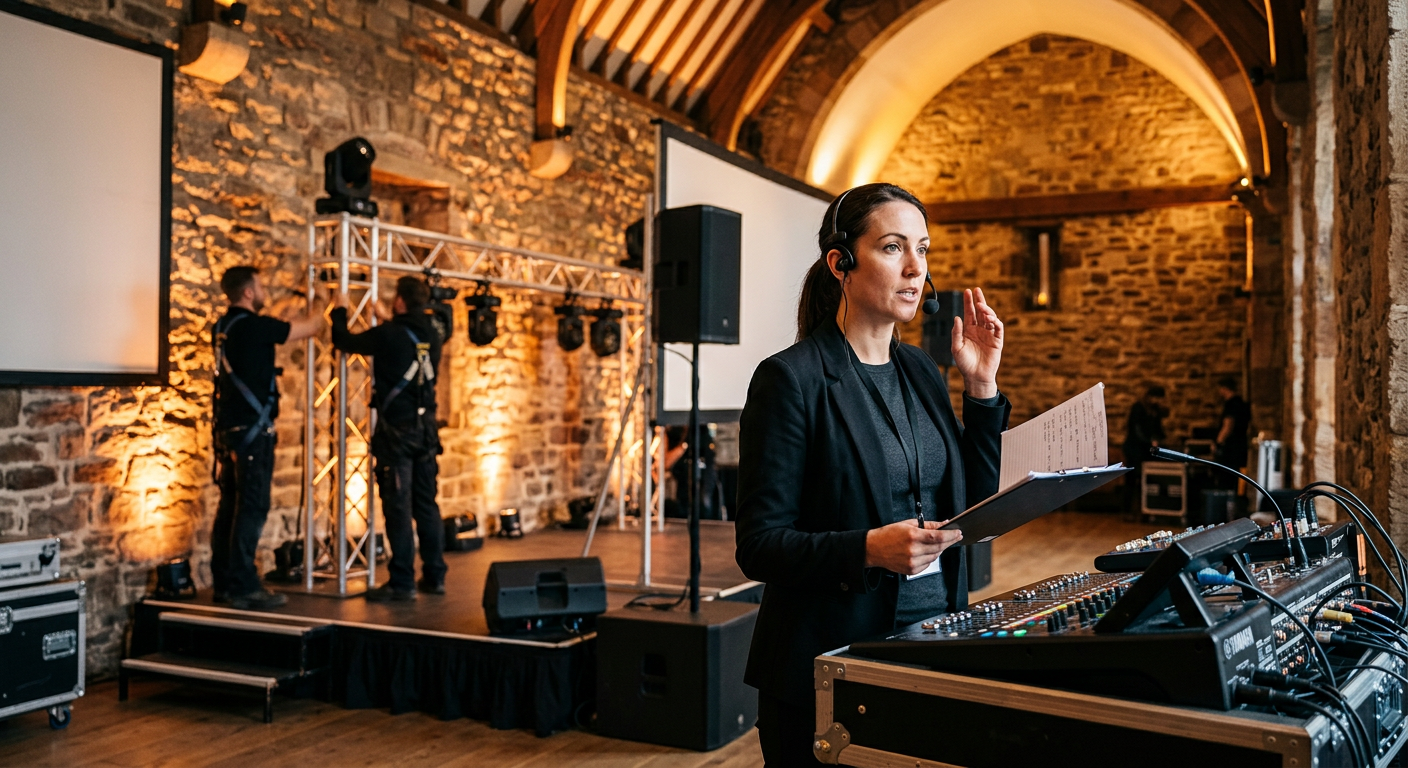
To prevent this, the oversight structure must treat the timeline as a fluid instrument. If speeches overrun by fifteen minutes, the coordinator must immediately inform the evening entertainment to abbreviate their soundcheck protocol, whilst simultaneously directing the venue staff to clear only the immediate operational footprint required for the technical build.
Why capacity planning outweighs aesthetic design
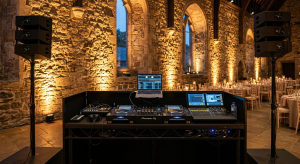
Aesthetically pleasing venue spaces often hide severely limited technical infrastructure. This is particularly prevalent in historic properties across Aberdeenshire and the Highlands, where a beautifully restored stone hall may rely on an outdated electrical consumer unit. Planners frequently design the visual layout of a room without ever auditing the power capacity required to execute that vision safely.
A modern professional event setup draws a significant continuous electrical load. A high-fidelity PA system, a suite of automated room uplighting, a dedicated #SelfiePod, and standard catering equipment cannot share a single 13-amp domestic ring main. When a venue’s infrastructure is pushed beyond its threshold, the resulting voltage drop causes audio amplifiers to clip, lighting controllers to reset, and ultimately, breakers to trip.
Practical rule: Never allow catering equipment to share a power phase with audio-visual setups; mandate dedicated generator lines or isolated ring mains for high-draw appliances before signing the venue contract.
Capacity planning extends beyond power to encompass spatial and regulatory limits. Venues strictly enforce policies regarding Public Liability Insurance (typically demanding £10m coverage) and valid PAT (Portable Appliance Testing) certificates. If an independent vendor arrives with uncertified equipment, the venue’s compliance officer possesses the authority to halt the setup entirely. Navigating these regulatory boundaries is a critical component of How to Source Reliable Professional Event Hire in 2026, ensuring that every contracted supplier meets the operational baselines required by strict venue management before the day of the event.
The hidden cost of isolated supplier contracts
A pervasive misconception among corporate clients and private party hosts is that a “venue coordinator” performs the same function as an event manager. They do not. A venue coordinator is employed by the property to protect the building, ensure fire regulations are met, and manage the in-house catering staff. They do not oversee external suppliers, they do not manage your independent entertainment, and they will not mediate a dispute between your hired photographer and your lighting technician.
When you hire suppliers in isolation, you create a fragmented communication structure. The provider of the confetti cannons does not know the specific cues of the DJ; the mobile disco operator does not know the specific spatial requirements of the event photographer. As detailed in A Comprehensive Guide to Choosing Event Management Strategies for 2026, this fragmentation forces the client into the role of project manager on the day of their own event.
If the setup is delayed, isolated suppliers will point to their own contracts, which usually state they require a clear, unobstructed space for a minimum duration. By failing to integrate these contracts under a single operational banner, the client assumes all the risk.
Reviewing structures like 4 Top Providers of a DJ for Corporate Events in 2026: Agencies Compared demonstrates that professional services increasingly stipulate “safe working environment” clauses. If another supplier prevents them from accessing the loading bay or setting up their equipment safely, they are contractually permitted to delay their start time. Centralised management prevents these clauses from being invoked by managing the physical space proactively.
How room turnaround times dictate technical infrastructure
The “room flip” is the most vulnerable phase of any large gathering. This is the designated period where a space is transformed from a dining configuration to an evening reception format. Venues frequently promise clients a highly optimistic turnaround time – often 30 to 45 minutes – based solely on the time it takes their staff to move furniture.
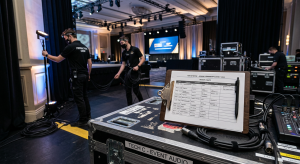
However, moving tables is only the first step. A professional technical build involves hauling heavy flight cases from a loading bay, establishing safe cable runs across public walkways, erecting heavy lighting totems, and conducting vital acoustic testing. A highly reverberant room with stone walls and high ceilings requires a precise soundcheck to prevent harsh frequencies and unintelligible audio. Rushing this process guarantees poor sound quality and introduces severe trip hazards as cables are hastily taped down.
Practical rule: Calculate your room turnaround time by multiplying the venue’s stated estimate by 1.5, then allocate the resulting buffer entirely to your technical suppliers for safe assembly and acoustic testing.
Furthermore, the complexity of the technical infrastructure must directly correlate with the available setup window. If the venue absolutely restricts access to a 45-minute window, you cannot hire a production company that requires two hours to build a truss system. The logistics of loading, building, and breaking down equipment are a major factor in pricing and viability, a dynamic explored extensively in 7 Variables Determining Your Professional Wedding DJ Cost in 2026. Failing to align the technical ambition with the operational reality of the venue’s timetable is a guaranteed route to delays and compromised safety.
Comparing oversight frameworks for large gatherings
Choosing how to oversee a large gathering requires understanding the exact limits of each framework. The table below breaks down the three primary models of operational control, highlighting where the liability and logistical burden fall.
| Operational Dimension | Do-It-Yourself (DIY) Coordination | Venue-Provided Coordination | Professional External Management |
|---|---|---|---|
| Primary Loyalty | The host (though often overwhelmed) | The venue and its physical assets | The event timeline and the client |
| Technical Oversight | Non-existent; relies on vendor honesty | Limited to building compliance (PAT/PLI) | Comprehensive power and spatial mapping |
| Supplier Integration | Host must brief every vendor individually | Vendors are largely left to their own devices | All vendor timelines are synchronised prior to arrival |
| Risk of Delay | High; dependencies are rarely mapped | Moderate; venue will push back on external delays | Low; buffers are built into the master schedule |
| Conflict Resolution | Host mediates disputes in real-time | Venue intervenes only if building is at risk | Manager resolves conflicts invisibly behind the scenes |
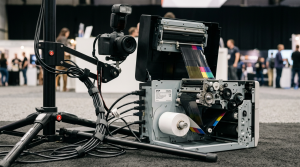
For elements like interactive entertainment, the framework dictates success. As noted in Choosing the Right Photo Booth Rental for Your Event: A 2026 Guide, placing a high-traffic attraction like a #SelfiePod requires careful spatial planning to prevent bottlenecks near the bar or the dancefloor. A DIY coordinator usually places it wherever there is an empty wall; a professional manager maps the foot traffic and the cable runs long before the equipment arrives.
Who should avoid external coordination
Not every event requires an independent manager to oversee the timeline. If you are hosting a gathering in a purpose-built, full-service hotel that mandates the use of its own integrated AV systems, in-house catering, and preferred decor suppliers, introducing an external coordinator often creates an expensive redundancy. In these tightly controlled environments, the venue operates as a closed ecosystem. The “seams” between suppliers are managed internally because the venue employs all the suppliers.
Similarly, single-room functions with fewer than fifty guests, where the space does not require a turnaround phase and the entertainment consists of a simple playlist plugged into an existing house system, do not generate the logistical friction that necessitates professional oversight.
However, the moment you hire an empty, “dry-hire” space – such as a marquee, a historic barn, or a heritage estate – and begin contracting independent caterers, mobile bars, technical production, and professional entertainment separately, external oversight transitions from a luxury to an absolute operational requirement. Without it, you are simply hoping that a group of strangers will seamlessly integrate their complex technical requirements by chance.
FAQ
What is the difference between an event manager and a venue coordinator?
A venue coordinator represents the property, focusing on building safety, fire regulations, and in-house catering schedules. An event manager works for the client, overseeing the entire timeline, integrating independent suppliers, and managing the technical logistics that the venue does not control.
Why do technical suppliers need so much time for a room turnaround?
Beyond simply moving equipment, technical suppliers must establish safe cable pathways to prevent trip hazards, erect heavy lighting safely to prevent falls, and conduct acoustic soundchecks. Rushing this process compromises public safety and guarantees poor audio-visual performance.
Can catering and entertainment share the same power supply?
It is highly ill-advised. Commercial catering equipment (like hot water urns and portable ovens) draws immense, sudden spikes of power. If they share a phase or ring main with audio-visual equipment, the resulting voltage drop will frequently trip breakers or damage sensitive technical amplifiers.
What documentation will a venue demand from external event suppliers?
Reputable venues strictly require up-to-date PAT (Portable Appliance Testing) certificates for all electrical equipment and proof of Public Liability Insurance (usually a minimum of £5m to £10m). Failure to produce these on arrival will result in the venue halting the setup.
How do I prevent schedule delays from ruining the evening reception?
The most effective method is to build hidden 15-minute buffers into the daytime schedule. Do not publish these buffers on the public timeline. If the daytime events run to schedule, you gain extra time for the evening setup; if they overrun, the buffer absorbs the delay without impacting the evening entertainment.