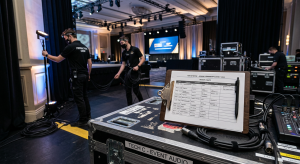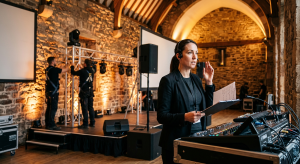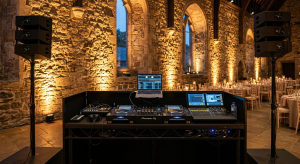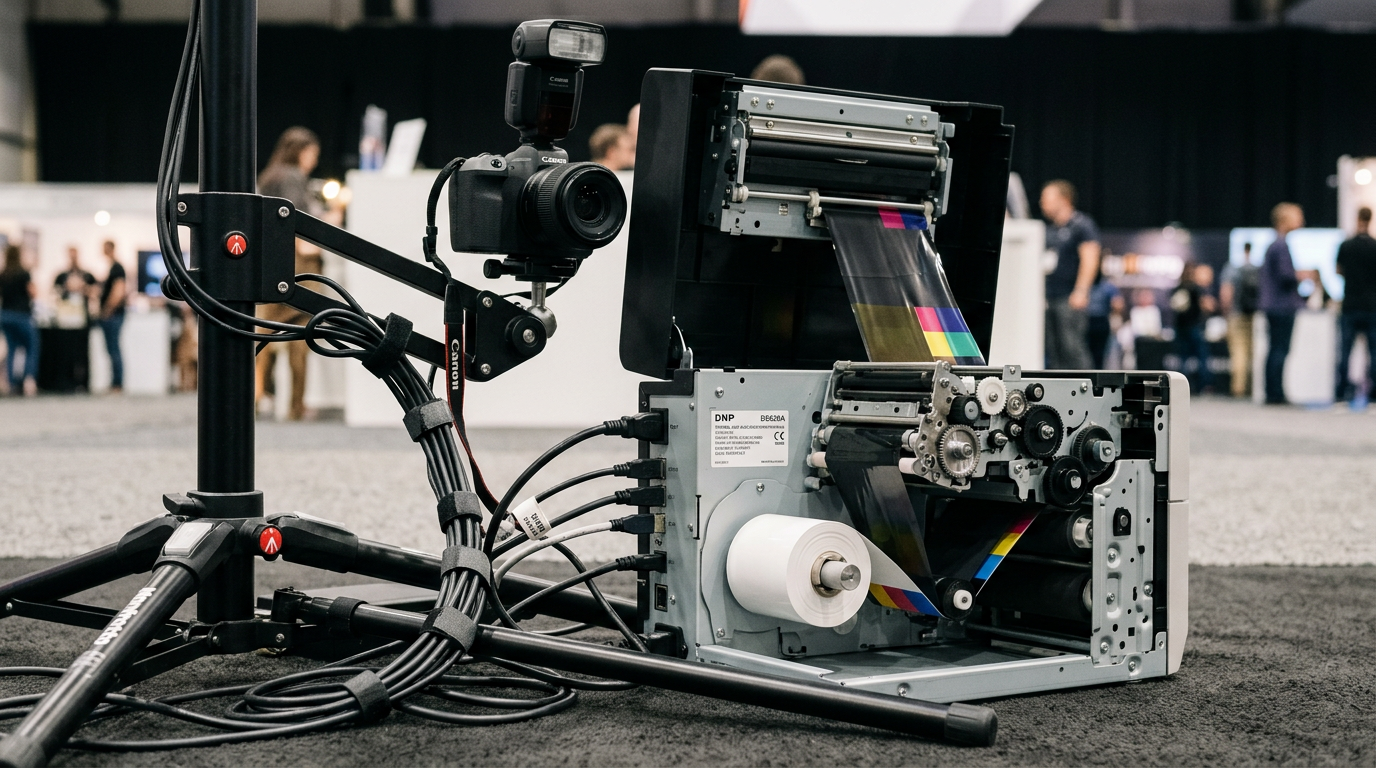
Most venue coordinators assume a photo booth rental simply drops a camera into the corner of a room, leaving guests to figure it out. The reality of event throughput is entirely different. A badly placed unit creates physical bottlenecks, stalled print queues, and unusable images under dim ambient lighting. Securing the right hardware means evaluating power draws, spatial clearances, and the exact mechanism that turns a digital file into a physical print before the guest walks away. The technical rigour behind the lens dictates whether a reception flows smoothly or grinds to a halt around a failing printer.
Quick Summary
Evaluating event entertainment requires stripping away the marketing to examine the core delivery mechanics and operational limitations of each provider. Assessing these systems ensures that the chosen hardware matches the venue’s footprint and timeline.
- Examine strict geographical delivery boundaries before calculating base costs.
- Audit the physical clearance and dedicated power requirements of open-air arrays.
- Compare single-discipline suppliers against operators running bundled audiovisual setups.
- Scrutinise early setup fees that penalise restrictive venue access times.
Table of Contents
- Buying Guide / How to Choose
- 1. CandidCamera
- 2. The Best Photobooths
- 3. The Proper Booth
- 4. Ultrabooth
- Mapping the Hardware to Your Event
- Recommended Reads
Buying Guide / How to Choose
Analysing the technical capabilities of event hardware requires establishing a strict baseline for comparison. When calculating your wedding photobooth cost, the raw hardware specifications matter less than the logistical framework that delivers them to the venue. A premium camera sensor provides zero value if the supplier’s operational model fails to align with your venue’s strict load-in schedule. We evaluate these providers through a specific classification lens: the Service Delivery Model.
This axis separates the market into four distinct operational categories:
- Regional Independent: These operators base their entire pricing structure on hyper-localised transport routes, offering highly competitive base rates that evaporate the moment a venue falls outside their primary catchment zone.
- National Volume Provider: Operating through a distributed network of regional offices, these suppliers rely on standardised multi-tier packages. They guarantee logistical redundancy but often gate standard features behind expensive premium upgrades.
- Digital & Open-Air Specialist: Stripping away the traditional enclosed cabin, these setups rely on wide-angle optics and digital pose guidance. They require significantly larger floor plans and strict environmental controls to function correctly.
- Hybrid Entertainment Package: These providers bundle distinct event disciplines – typically visual capture and audio performance – into a single operational contract, lowering administrative overhead but imposing rigid time ratios on the services.
Practical rule: Always measure the venue’s available floor space before committing to a delivery model, as clearance requirements often dictate which technical setups can physically operate on the day.
Understanding seven key pricing factors that determine your final invoice allows for a more accurate comparison across these different models.
| Product | Service Delivery Model | Features | Pros | Cons | Target Audience |
|---|---|---|---|---|---|
| CandidCamera | Regional Independent | 4-hour active service, unlimited sessions, instant prints, attendant | Low weekday entry price, transparent deposit structure, attendant included | Strict delivery radius, per-mile surcharges, limited national scope | Planners managing single-venue events within the North West |
| The Best Photobooths | National Volume Provider | Touch screen tech, virtual booth options, physical guestbooks | Multi-city infrastructure, remote digital options, structured tiers | Steep pricing gaps, standard features gated, premium tier required for messaging | Corporate teams executing concurrent multi-region campaigns |
| The Proper Booth | Digital & Open-Air Specialist | Interactive pose tips, recycled physical props, open-air arrays | High engagement software, sustainable prop disposal, unconfined group shots | Demands massive footprint, dedicated power needed, early setup penalties | Event designers working with spacious contemporary venues |
| Ultrabooth | Hybrid Entertainment Package | V-Luxe enclosed booth, custom mosaic canvases, bundled DJ service | High-end DSLR sensors, consolidated vendor contracts, rapid dye-sub printing | Rigid time ratios, forces unused capacity, complex multi-discipline setup | Planners requiring simultaneous audio and visual coverage |
1. CandidCamera
For event planners in the North West looking for localised support, CandidCamera operates as a Regional Independent supplier, focusing purely on high-touch, single-county deployments.
According to their published pricing, weekday events starting from Monday to Thursday see base rates at £179, while weekend bookings from Friday to Sunday begin at £220. The operational mechanism revolves around securing the booking date through a £75 deposit, taking the final balance seven days before the event to finalise the logistical load-in. Once on-site, the standard package deploys a trained attendant to manage unlimited guest sessions and generate instant prints over a four-hour active service window. The attendant actively manages the queue and calibrates the hardware, preventing the common bottleneck where guests struggle with software interfaces or paper jams stall the output.
Geographical constraints dictate the budget impact
The strict ten-mile radius around their Poulton-le-Fylde base defines their financial viability. If your venue sits beyond this immediate boundary, the 50p per mile surcharge applied to both the outward and return journeys rapidly inflates the base cost. This mileage penalty turns an aggressively priced regional offering into an expensive logistical burden for venues located at the far edges of Lancashire or beyond. Planners attempting to pull this service into neighbouring counties will find that the transport overhead heavily negates the low entry price.
We would hesitate to book this setup for a complex, multi-room schedule spread across different postcodes, as the transport mechanics do not support fractured timelines. Instead, this system excels when you evaluate platform features for a physical booth setup contained entirely within a single, local venue.
Opt for this setup when your venue sits tightly within their immediate delivery zone and you require standard physical prints without complex customisation or national scalability.
Pros
* Maintains a highly accessible starting price for weekday deployments.
* Includes a dedicated attendant to handle technical troubleshooting and queue management.
* Requires a low initial deposit to lock in the hardware for a specific date.
Cons
* Imposes immediate mileage surcharges for venues beyond a tight ten-mile radius.
* Lacks the infrastructure to support simultaneous multi-city corporate events.
* Forces weekend clients to absorb a higher baseline pricing structure.
2. The Best Photobooths
Unlike operators constrained by a single county’s borders, The Best Photobooths delivers a National Volume Provider model designed to handle high-capacity requirements across the country.
They operate a structured, multi-tier package system across the United Kingdom, maintaining dedicated regional offices in Marlow, Mayfair, Windsor, Beaconsfield, and Winchester to handle distributed fleet logistics. The mechanism separates their capabilities into rigid output tiers. The baseline ‘Simply The Best’ tier provides three hours of touch-screen operation and full-colour physical prints for £420.00. Moving beyond physical cabins entirely, they also run virtual photo booth packages from £475, capturing remote guests via their own digital devices without requiring any physical hardware deployment on-site. This separation allows them to service entirely digital campaigns alongside traditional venue-based events.
Volume infrastructure enables diverse physical and digital formats
The jump from a basic £420 package to the £635 ‘Save The Best ‘Til Last’ comprehensive tier carries a steep premium. Buyers pay this just to access a personalised guestbook and video messaging. The tiering remains strictly rigid. A client who simply wants guests to leave a short video clip cannot add that specific feature to the base package. They absorb the entire premium upgrade cost. This structural restriction rules out planners operating on tight budgets. These planners require a modular, a-la-carte approach to building their entertainment package.
We would bypass their remote digital offering for traditional, intimate receptions, focusing instead on deploying their physical touch-screen hardware for large-scale, multi-site deployments where identical output is mandatory. The scale of their operation makes them highly reliable when integrating with professional photography booking platforms across different regions.
Select a national provider when managing multi-city corporate campaigns where identical physical setups and hardware redundancy are mandatory across all chosen venues.
Pros
* Provides distributed regional offices to ensure logistical redundancy across the UK.
* Offers remote virtual setups for events with scattered digital audiences.
* Integrates modern touch-screen interfaces across all physical hardware tiers.
Cons
* Requires a significant financial upgrade to access basic video messaging capabilities.
* Prices virtual, hardware-free packages higher than baseline physical deployments.
* Restricts customisation by locking standard features into rigid, pre-defined tiers.
3. The Proper Booth
Pushing guests into a dark, enclosed shell often limits group shots, a restriction The Proper Booth bypasses entirely by deploying a Digital & Open-Air Specialist configuration.
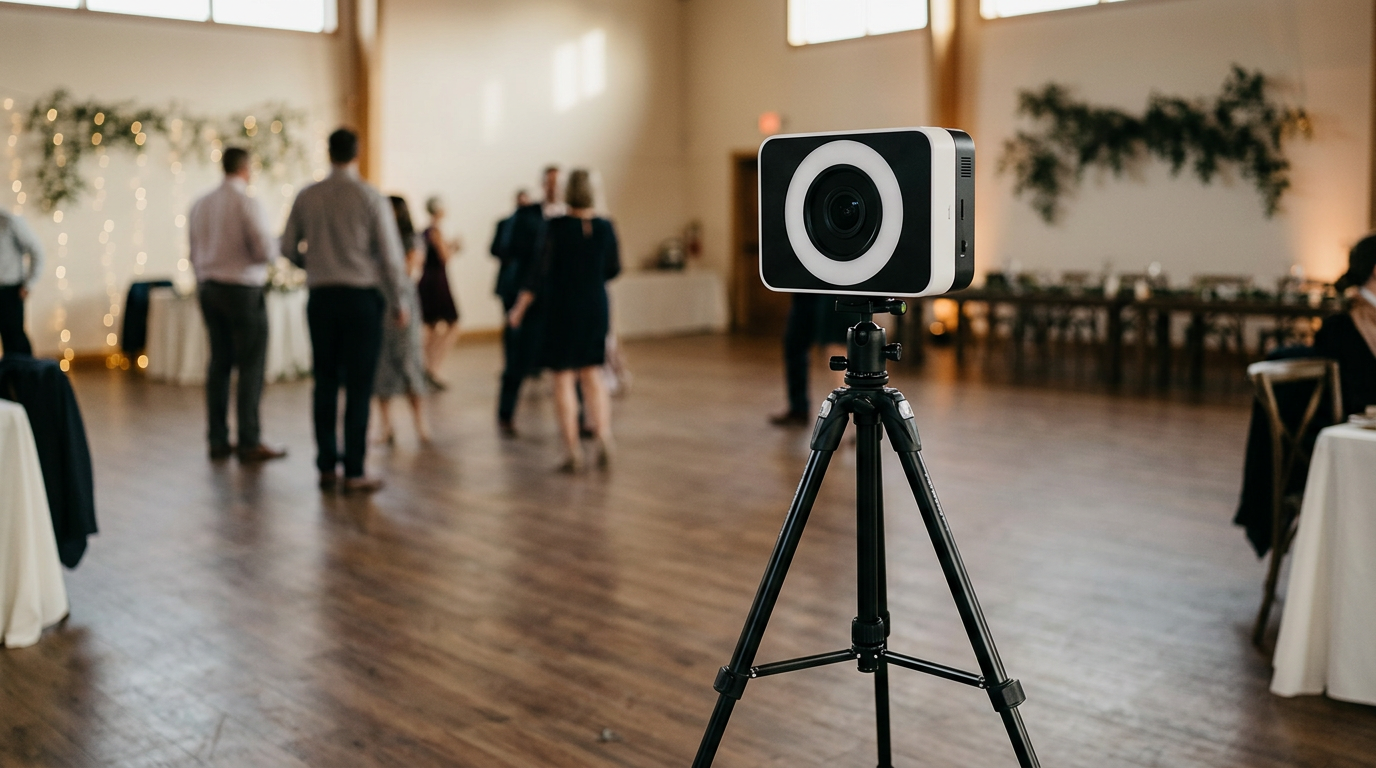
Operating heavily in the corporate and private sector, they strip the hardware back to an unconfined digital array. The mechanism uses interactive digital screens that issue pose tips directly to the user during the session, removing the need for an attendant to constantly direct the framing. To manage the environmental impact of physical events, they provide physical stick props that are deliberately recycled after every booking. Because the camera lens operates without physical walls, the system relies entirely on focal length distance to capture full bodies and large groups, pushing the technical requirements out into the venue’s floor plan rather than containing them within a constructed box.
Spatial demands outsize the physical footprint
This open-air array has strict spatial needs. It requires a nine-foot by nine-foot by nine-foot space alongside a dedicated standard power outlet. It cannot simply be squeezed into a venue’s hallway or leftover corner. Timelines can also trigger a £50 early setup fee. This applies whenever hardware must be in place more than an hour and a half before the active service begins. This severely complicates logistics for venues that demand morning load-ins to avoid disrupting the afternoon schedule. Planners must either pay the penalty or risk wheeling heavy digital arrays through the venue while guests are present.
Practical rule: Map your venue access times against the supplier’s early delivery penalties to avoid unexpected surcharges on the final invoice.
We would strictly deploy this unconfined setup in spacious foyers or dedicated breakout rooms where the extensive physical clearance does not obstruct primary walkways or fire exits.
Reserve this digital array for spacious corporate galas where the open footprint itself acts as part of the visual event design.
Pros
* Guides user interaction automatically through integrated digital pose tips.
* Reduces event waste by actively recycling physical stick props after each deployment.
* Accommodates much larger group shots than a traditional enclosed cabin.
Cons
* Demands an exceptionally large cubic clearance to operate the camera focal lengths.
* Penalises standard morning load-in schedules with early setup financial fees.
* Fails entirely if the venue cannot provide an isolated, dedicated power outlet.
4. Ultrabooth
A venue manager coordinating a tight evening turnaround rarely has the luxury of staging multiple suppliers simultaneously. Ultrabooth addresses this by operating as a Hybrid Entertainment Package, integrating separate event disciplines into one contract.
Operating across South Wales and England, including Cardiff, Swansea, and Newport, they tie visual capture directly alongside audio performance. Their enclosed V-Luxe booth combines professional DSLR or mirrorless camera optics with fast dye-sublimation printing, ensuring high-resolution output that outpaces standard inkjet technology. Beyond standard strip printing, they process images into custom mosaic canvases, ranging from £249 for a single 100cm by 70cm unit up to £369 for a three-canvas set. Their flagship operational mechanism is the Silver Package, which consolidates procurement by tying three hours of manned booth operation to a comprehensive five-hour DJ set.
Hardware upgrades push the boundaries of standard physical output
The bundled Silver tier dictates a fixed ratio of three hours for prints against five for audio. If an event requires a longer visual service or a shorter musical set, the rigid package structure forces the planner to pay for misaligned operational hours. This lack of modularity severely limits planners who need flexible timelines; booking the package means accepting that the booth will shut down two hours before the audio set concludes, creating an uneven entertainment experience late in the evening.
We prefer this consolidated approach for clients who struggle with vendor management, as it reduces administrative overhead when establishing strategies for musical curation alongside visual entertainment.
Lock in this combined service when you need to consolidate vendor contracts and guarantee simultaneous audio and visual entertainment without managing separate load-in schedules.
Pros
* Utilises professional DSLR and mirrorless sensors for superior image clarity.
* Consolidates two major entertainment disciplines into a single vendor contract.
* Transforms individual guest captures into large-scale, permanent mosaic canvases.
Cons
* Forces a strict time ratio between the visual operation and the audio set.
* Requires clients to absorb the cost of a full DJ setup even if they only need visual hardware.
* Creates an abrupt end to the physical printing service long before the music stops.
Mapping the Hardware to Your Event
Choosing the correct hardware requires aligning the supplier’s delivery constraints with the physical realities of the venue. Assessing these models against the essential factors when hiring a DJ or booking visual setups prevents logistical failures on the day.
When operating within a tight, local radius where venue access is straightforward, a Regional Independent model provides the most cost-effective baseline, provided the location falls strictly within the penalty-free transport zone.
For expansive, multi-city corporate events demanding identical hardware across several venues, a National Volume Provider ensures consistent touch-screen technology and reliable fleet distribution, despite the higher premium required for advanced features.
If the venue offers massive floor clearance and the timeline permits immediate, rather than early, setup, a Digital & Open-Air Specialist removes physical barriers to accommodate large group interactions and unconfined posing.
Finally, when administrative overhead must be minimised and the timeline aligns perfectly with rigid operational ratios, a Hybrid Entertainment Package consolidates vendor management by bundling high-end DSLR setups directly with ongoing audio performance.