Designing a high-performing photobooth website is the cornerstone of a successful event rental business. In an increasingly competitive digital landscape, your online presence acts as your 24/7 sales representative, bridging the gap between a casual browser and a confirmed booking. A well-optimised photobooth website must not only showcase the visual appeal of your service but also streamline the user journey from initial discovery to contract signature.
Quick Summary
A high-converting photobooth website is a digital storefront designed to convert traffic into event bookings through intuitive navigation, social proof, and clear calls-to-action. By prioritising mobile responsiveness, transparent pricing structures, and high-quality gallery imagery, businesses can effectively demonstrate value and reduce friction in the client decision-making process.
- Prioritise high-resolution galleries showing real-world event setups.
- Integrate clear, accessible booking or enquiry forms.
- Leverage customer testimonials to build immediate trust.
- Ensure mobile responsiveness to capture mobile-first traffic.
Table of Contents
- Quick Summary
- Optimising the User Journey for Conversions
- Visual Storytelling and Gallery Management
- Implementing High-Converting Contact Forms
- Common Pitfalls and Troubleshooting
- FAQ
- Recommended Reads
Optimising the User Journey for Conversions
The user journey is the path a potential client takes from the moment they land on your site until they reach out for a quote. For an event hosting service, every additional click is a potential point of abandonment. Simplify the navigation by ensuring your primary service offerings, such as wedding DJ services, and your photobooth packages are visible within the first few seconds of page load.
Consistency in branding and tone is essential. A professional wedding DJ and party host often benefits from a clean, modern aesthetic that prioritises usability. Your website should lead the visitor naturally toward a conversion goal, such as an enquiry form, by using persuasive, benefit-led language rather than dry technical specifications. Ensure that internal links guide users through your service ecosystem, keeping them engaged for longer periods.
Visual Storytelling and Gallery Management
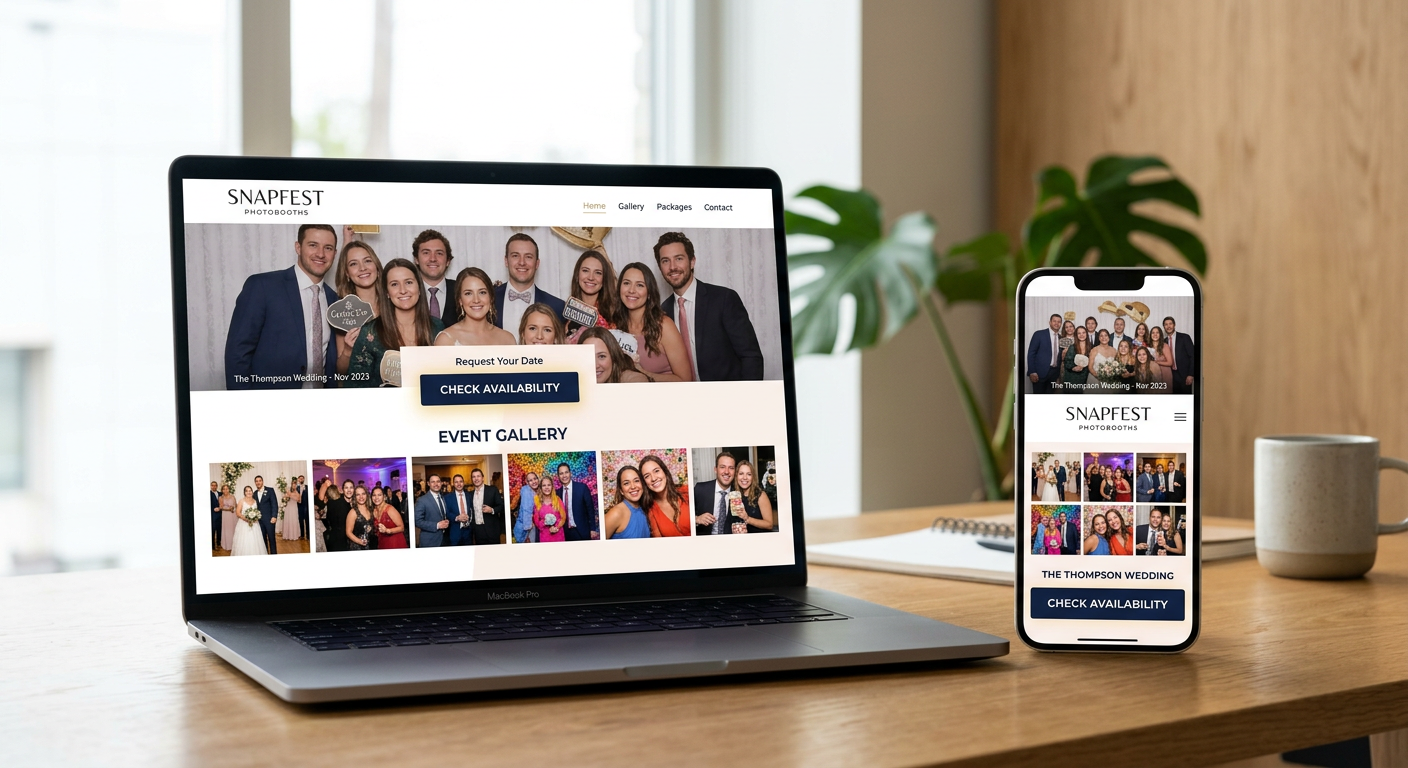
Your photobooth website is a visual medium. Clients are looking to see how your equipment transforms an event space. Avoid using stock photography; instead, display genuine images from past events that feature your actual selfiepod or booth setup. Real imagery builds credibility, proving that your business is established and capable of handling high-pressure environments like weddings or corporate functions.
When curating your gallery, focus on the ‘atmosphere’ rather than just the hardware. Show guests interacting with props, the quality of the lighting, and the final output of the prints or digital files. High-quality images should be optimised for web performance, ensuring they do not compromise loading speeds. A sluggish site can significantly increase bounce rates, negatively impacting your search engine rankings and overall conversion potential.
Implementing High-Converting Contact Forms
An enquiry form is the most critical element of your conversion strategy. Keep fields to a minimum – name, event date, venue location, and package interest are usually sufficient to initiate a conversation. Long, exhaustive forms act as a barrier, forcing potential clients to look elsewhere. Integrating an audio guestbook or other premium add-on options into your enquiry form allows you to upsell your services immediately upon initial contact.
Place your call-to-action buttons in prominent locations, such as the header, near gallery snippets, and in the website footer. The button copy should be action-oriented, such as ‘Check Availability’ or ‘Get My Bespoke Quote’, rather than a generic ‘Submit’. Mobile optimisation for these forms is non-negotiable; test the layout on various devices to ensure that text fields and buttons are easily clickable without excessive zooming.
Common Pitfalls and Troubleshooting
One common error is burying pricing information or failing to provide a clear indication of the service area. If a client has to guess if you serve their specific region, they may leave to find a more transparent competitor. Ensure your service locations are explicitly stated, reinforcing your presence in areas like the Highlands or Moray where applicable. Another pitfall is ignoring the technical performance of the site. Use tools to check for broken links or slow script execution, which can deter professional event planners.
Check for inconsistencies in your branding. Ensure that your testimonials are authentic and recent, as outdated feedback can make a business appear inactive. If you notice a high bounce rate on your contact page, review your form’s complexity. Sometimes, a simple ‘Contact via WhatsApp’ link provides a lower-friction path to connection than a traditional email form, especially for younger demographics who prefer rapid, informal communication.
FAQ
How often should I update my photobooth gallery?
Update your gallery after every major event or at least once a month. Fresh content keeps your site appearing active and relevant to search engines.
Should I include pricing on my website?
Including starting prices or package tiers helps filter out unqualified leads and establishes your positioning. Transparency often leads to higher-quality enquiries.
Why is mobile optimisation crucial for my rental business?
Most potential clients search for event services on their smartphones while on the go. If your site is not mobile-friendly, you lose a significant portion of your potential market.
What is the most important element on a photobooth landing page?
A clear, high-contrast call-to-action button, such as ‘Check Availability’, is the most vital component to drive actual bookings.