Scaling an occasion from two hundred to a thousand attendees requires more than simply ordering larger speakers. The most frequent miscalculation in sourcing event hire for major corporate and private gatherings is treating technical infrastructure as a modular addition rather than a strict sequential dependency. When you specify a fifteen-kilowatt line array without first verifying whether the venue’s single three-phase distribution board is already saturated by the catering ovens, the event does not merely sound quieter – it trips the mains and halts entirely. Professional production relies on mapping the physical and electrical limits of a space before a single piece of equipment is quoted.
Quick Summary
Sourcing professional equipment for large-scale gatherings requires auditing venue infrastructure before specifying technical hardware. You must match audiovisual dispersion to room acoustics, sequence logistics to prevent loading dock bottlenecks, and mandate strict redundancy protocols.
- Audit venue load-bearing limits before specifying flown rigging.
- Separate audiovisual power phases from high-draw catering equipment.
- Match speaker dispersion angles to the exact seating dimensions.
- Sequence delivery slots to prevent concurrent vendor arrivals.
- Mandate uninterruptible power supplies (UPS) for all digital routing.
Table of Contents
- 1. Map the Venue Infrastructure Before Sourcing Event Hire
- Why structural load parameters dictate your equipment choices
- 2. Audit the Power Distribution Limitations
- How dynamic load sequencing prevents localised outages
- 3. Specify the Core Audiovisual Footprint
- Where generic specifications create acoustic blind spots
- 4. Sequence the Turnaround and Delivery Windows
- Why loading dock bottlenecks delay technical rehearsals
- 5. Institute Redundancy and Failure Protocols
- What happens when primary audio chains fail mid-event
- Where Common Sourcing Oversights Derail Large Gatherings
- FAQ
- Recommended Reads
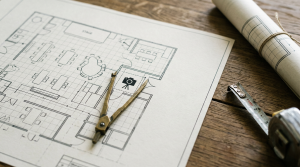
1. Map the Venue Infrastructure Before Sourcing Event Hire
Why structural load parameters dictate your equipment choices
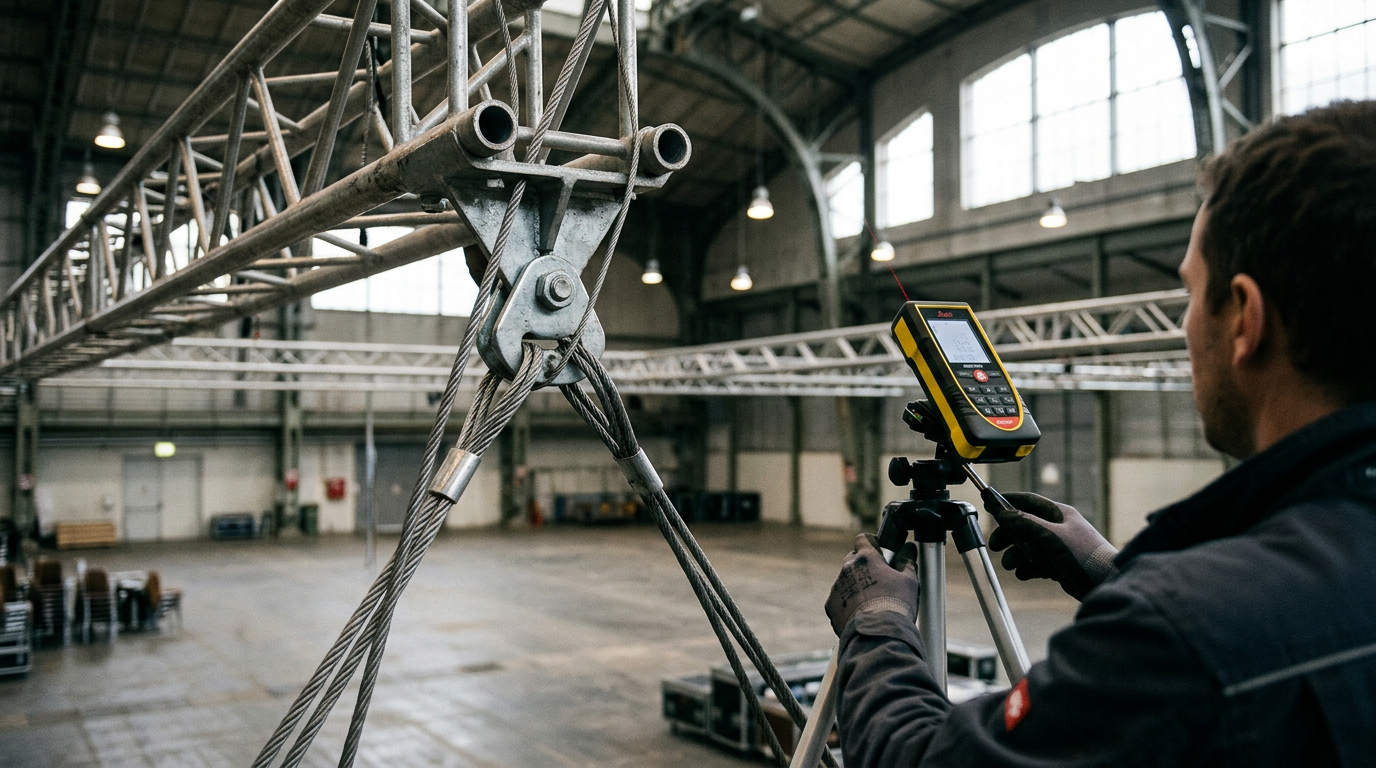
The ceiling of a five-star hotel ballroom looks capable of supporting heavy production equipment, but plasterboard facades often conceal lightweight structural steel. The primary mistake planners make at this stage is trusting a venue’s marketing brochure rather than demanding the technical rigging plot. When you contract a supplier to provide a flown (suspended) lighting truss without confirming the Safe Working Load (SWL) of the venue’s anchor points, the installation crew will refuse to lift the gear on site, forcing a sudden and costly pivot to ground-supported stands that eat into your floor plan.
To prevent this, you must distinguish between point loads (the weight focused on a single hanging bracket) and Uniformly Distributed Loads (UDL) across a truss span. If the venue restricts rigging to 250 kilograms per point, you cannot hang a dual-motor truss carrying twelve moving-head fixtures and a central LED video wall. Your immediate action is to request the venue’s structural engineering certificate and provide it to your audiovisual supplier before paying any deposits. For broader planning strategies, consulting A Comprehensive Guide to Professional Event Management for 2026 reveals how spatial planning integrates directly with these structural realities.
2. Audit the Power Distribution Limitations
How dynamic load sequencing prevents localised outages
Large-scale events consume vast amounts of electricity, and standard wall sockets (13-amp domestic rings) cannot handle the transient peaks of professional subwoofers or the sustained draw of incandescent lighting. The mechanics of professional power distribution rely on three-phase connections (typically 32-amp, 63-amp, or 125-amp C-form connectors). These systems split the electrical load across three separate phases (L1, L2, L3) to maintain stability.
The classic failure mode here is the “shared phase trip.” Planners frequently allow the catering team to plug their commercial fryers and water boilers into the same phase that powers the main audio amplifiers. When the bass drops during a crucial moment at the exact second the catering thermostats engage, the sudden combined current draw exceeds the Miniature Circuit Breaker (MCB) rating, plunging the room into silence and darkness. You must actively enforce separation. Walk the venue, locate the primary distribution board, and instruct your production manager to map the lighting and audio entirely on isolated phases, leaving the highest-draw heating elements strictly segregated.
3. Specify the Core Audiovisual Footprint
Where generic specifications create acoustic blind spots
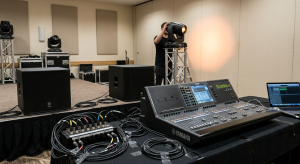
Choosing the correct audio system is a matter of geometry, not just volume. Sound behaves predictably according to the inverse square law: every time the distance from the speaker doubles, the sound pressure level drops by six decibels. To counter this in large rooms, professionals specify line array systems, which create cylindrical sound waves that carry further without deafening the front rows.
However, the common error is over-specifying the rig without calculating the room’s reverberation time (RT60). Putting a massive, wide-dispersion system into a venue with hard glass walls and uncarpeted floors creates severe slapback echo, rendering speeches unintelligible regardless of how expensive the equipment is.
Practical rule: Always match the horizontal dispersion angle of the primary PA system to the exact width of the seating area to avoid reflecting high frequencies off untreated side walls.
When reviewing 4 Top Providers of a DJ for Corporate Events in 2026: Agency vs Platform, you must separate technical capability from basic library size; a provider must understand how to time-align delay speakers halfway down a long room so the sound reaches the back row simultaneously.
4. Sequence the Turnaround and Delivery Windows
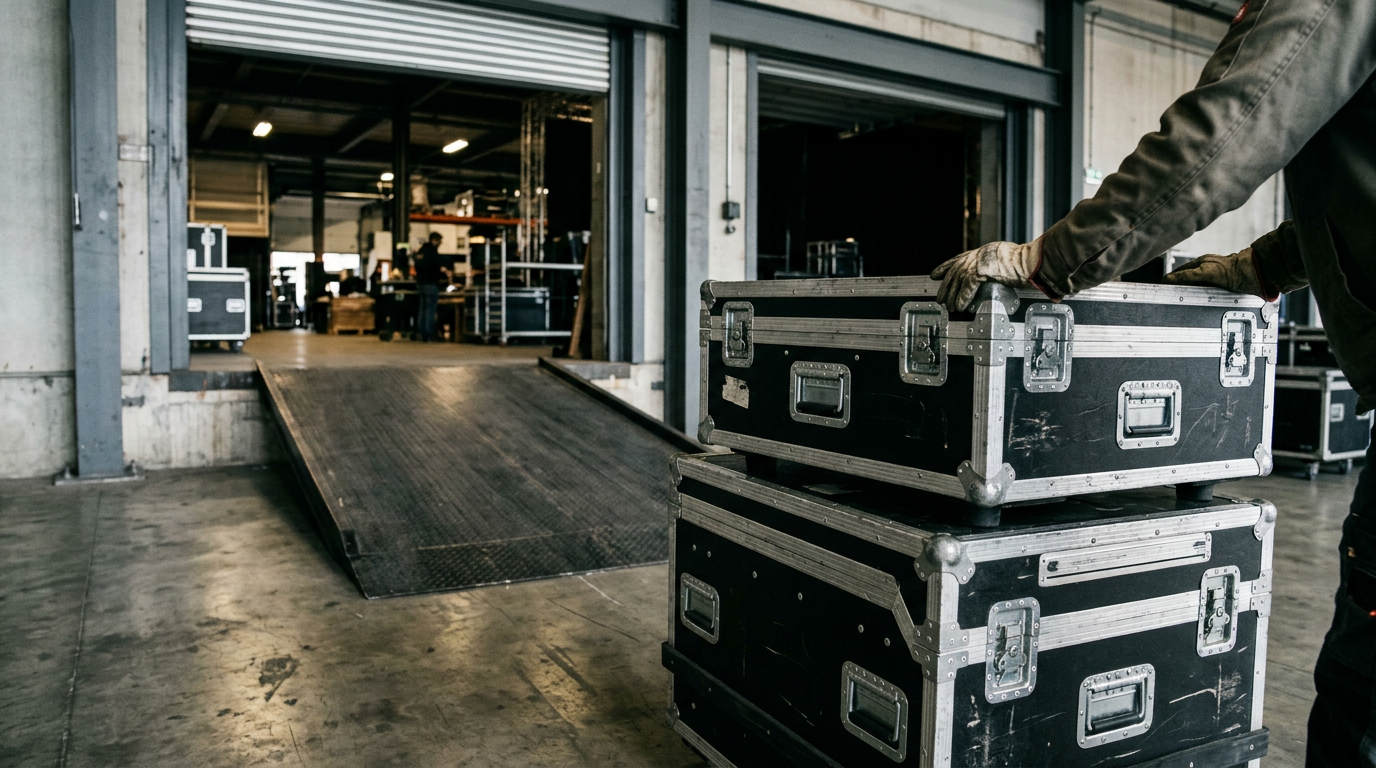
Why loading dock bottlenecks delay technical rehearsals
The logistics of getting three tons of equipment into a building dictate the success of the entire schedule. Professional gear travels in heavy, wheeled flight cases. It requires smooth, step-free access, functioning tail-lifts on delivery trucks, and service lifts capable of holding significant weight.
The mistake that destroys event timelines is the concurrent load-in. Stacking the staging company, the audiovisual supplier, and the florists at a single-bay loading dock at 08:00 guarantees gridlock. As detailed in The Mechanics of Event Management: Resolving Bottlenecks in Large Gatherings, uncoordinated arrival slots force highly paid technical crews to stand idle on the street while waiting for access. You must build a staggered load-in schedule. Rigging and overhead lighting must go in first because the floor must be clear for elevated work platforms. Audio and staging follow, with catering and decorative elements arriving last. Check the internal dimensions of the venue’s service lift yourself – if a two-metre truss segment cannot fit diagonally inside, the crew will have to carry it up four flights of fire stairs, adding hours to the build.
5. Institute Redundancy and Failure Protocols
What happens when primary audio chains fail mid-event
In professional event production, equipment will eventually fail. The difference between a minor operational blip and a catastrophic event halt is network redundancy. Modern audio and lighting systems run over digital networks (like Dante or Art-Net) using standard Cat5 or Cat6 cabling. While this allows for massive channel counts over a single thin wire, it creates a severe single point of failure.
The most damaging oversight is backing up the physical speakers but ignoring the routing network. If a single network switch fails and you have no secondary analogue fallback, the entire audio system goes down instantly. You must mandate that your supplier runs a secondary, completely isolated Dante network alongside the primary one. Furthermore, budget forecasting, outlined in 7 Variables Determining Your Professional Wedding DJ Cost in 2026, relies heavily on specifying these fail-safes upfront. Ensure every digital mixing console is powered through an Uninterruptible Power Supply (UPS). A momentary two-second power dip from the venue will cause a digital desk to reboot – a process that leaves you in total silence for up to three agonizing minutes unless a UPS bridges the gap.
Where Common Sourcing Oversights Derail Large Gatherings
Even with rigorous planning, specific technical oversights routinely compromise major events. These failures often present identical symptoms to an untrained ear or eye, but require entirely different diagnostic approaches and solutions.
The Silent Impedance Mismatch (Most Frequent Cause of Failure)
– Symptom: The audio system produces a loud, continuous 50-hertz buzzing sound that increases in volume when stage lighting changes colours or intensity.
– Fix: This is a ground loop, caused when audio and lighting equipment are tied to different earth potentials. The fix is not to turn down the amplifiers, but to insert passive DI (Direct Injection) boxes with ground-lift switches into the signal path between the DJ mixer and the main PA, physically breaking the electrical earth connection while allowing the audio signal to pass.
Intermodulation Distortion in Wireless Networks
– Symptom: Keynote microphones cut out sporadically when presenters walk across specific areas of the stage, despite showing full battery life.
– Fix: This is rarely a distance issue; it is a frequency collision. In urban centres, digital television broadcasts crowd the RF (Radio Frequency) spectrum. Sourcing cheap, unlicensed wireless microphones guarantees interference. The solution is forcing your supplier to use professional RF scanning software to coordinate clean, legally licensed frequency bands before the event begins.
Spatial Miscalculations for Interactive Elements
– Symptom: Traffic flow grinds to a halt around the venue’s entryways, creating a fire hazard because queue lines spill into transit corridors.
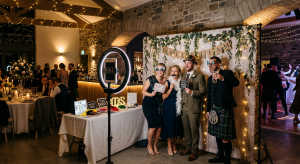
– Fix: Planners frequently underestimate the physical footprint required for auxiliary entertainment. Specifying interactive elements requires exact dimensions, and Choosing the Right Photo Booth Rental for Your Event: A 2026 Guide provides the floor space metrics needed to calculate safe offset distances. You must map out not just the footprint of the hardware, but the maximum capacity of the queue it generates.
FAQ
How do you calculate the power requirements for a large-scale event?
You must aggregate the maximum continuous power draw (rated in watts or amps) of every piece of equipment, dividing the total by the local voltage (230V in the UK) to find the required amperage. Always add a 20% safety margin and mandate that high-draw items, such as catering heating elements and audio amplifiers, operate on entirely separate phases.
What is the difference between active and passive PA systems for event sourcing?
Active PA systems have amplifiers built directly into the speaker cabinets, requiring both a signal cable and a mains power cable to every box. Passive systems rely on central amplifier racks positioned backstage, requiring only heavy-gauge speaker cables run to the cabinets. Passive systems are preferred for large outdoor or flown rigs to reduce suspended weight.
How long should you allocate for technical load-in and breakdown?
For a large-scale gathering (500+ attendees) involving flown trussing and line arrays, you must allocate a minimum of six to eight uninterrupted hours for the load-in and technical rehearsal, and three hours for the breakdown (strike). Concurrent vendor arrivals will double this requirement.
Why is a site visit mandatory before finalising equipment specifications?
A site visit uncovers physical limitations absent from venue floor plans. You must measure service lift dimensions, check the availability of three-phase power connections, and identify acoustic challenges like reflective glass walls that require directional line array speakers rather than standard point source boxes.