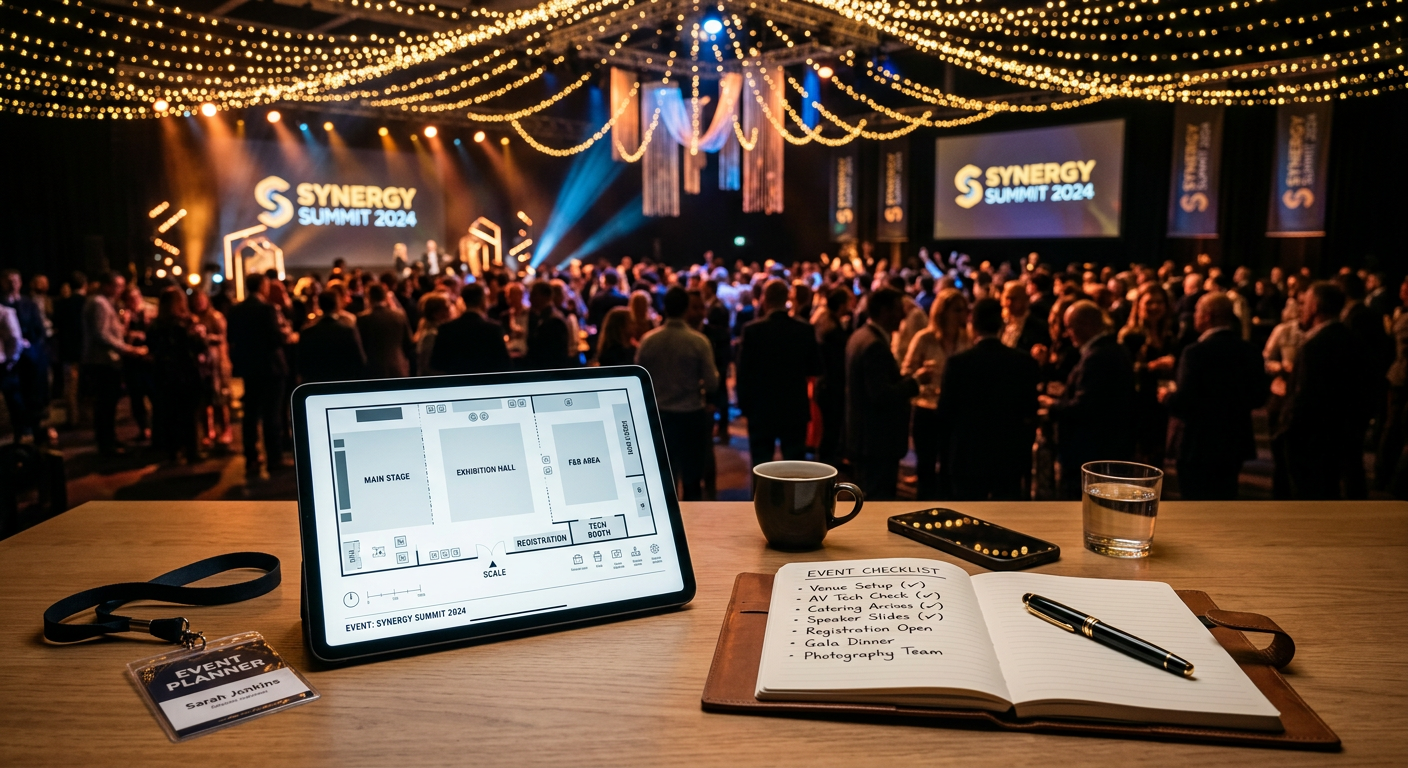
Selecting the right approach to event management is the cornerstone of any successful gathering, whether you are coordinating a high-stakes corporate conference or an intimate private celebration. As we navigate the professional landscape of 2026, the expectations for seamless execution and high-quality production have never been higher. Understanding the nuances between various service categories allows organisers to align their logistical needs with their specific budget and vision.
Quick Summary
Event management encompasses the strategic coordination of logistics, technical requirements, and vendor relations to ensure a cohesive function. Choosing the right strategy involves balancing internal resources against the expertise of external specialists.
- Define your core objectives to determine if you require full-service or modular support.
- Assess technical complexity versus budget availability to prioritise essential services.
- Prioritise professional accreditation and insurance to mitigate operational risks.
- Align your chosen category with your desired level of guest engagement and event scale.
Table of Contents
- Full-Service Event Management Agencies
- Independent Freelance Event Planners
- Venue-Based In-House Coordinators
- Self-Managed Hybrid Models
- Specialist Technical and Entertainment Suppliers
- Buying Guide – How to Choose Your Strategy
- FAQ
- Recommended Reads
Full-Service Event Management Agencies
Full-service agencies represent the premium tier of event management, offering end-to-end solutions that cover everything from initial creative conceptualisation to final breakdown. These firms act as a single point of contact, managing vendor procurement, site selection, complex logistics, and on-site production teams.
For large-scale corporate functions, these agencies provide invaluable risk management and scalability. They are particularly effective when the complexity of the event necessitates a highly synchronised workflow between multiple departments. While they offer the highest degree of convenience and professional finish, they are typically the most significant investment for an organiser.
Pros
- Comprehensive oversight of all logistical elements.
- High-level creative input and theme development.
- Access to exclusive vendor networks and industry discounts.
Cons
- Higher cost structures compared to specialised or individual service providers.
- Potentially less direct control over granular decision-making for the client.
Independent Freelance Event Planners
Independent planners offer a more boutique approach to event management, often providing a personalised service that feels more collaborative. These professionals are ideal for private celebrations or smaller corporate events where a bespoke, highly tailored result is the priority.
Because they operate with lower overheads than large agencies, independent planners can often provide more flexibility in their pricing and service offerings. They frequently act as an extension of the client’s own team, bringing a high degree of dedication to the specific goals of the host. You can learn more about how professional event hosting services integrate into these broader planning frameworks.
Pros
- Highly personalised client communication and support.
- Often more cost-effective for medium-scale private functions.
- Greater flexibility to adapt to unique, non-standard event requirements.
Cons
- Limited by individual capacity; large-scale events may require additional sub-contracted staff.
- Variability in service standards depending on the individual planner’s experience.
Venue-Based In-House Coordinators
Most professional venues provide an in-house coordinator as part of their rental package. These individuals are experts in the specific limitations and opportunities of the physical space, such as electrical capacity, sound restrictions, or load-in logistics.
While they excel at managing the facility-specific aspects of your event, their remit is often restricted to the venue itself. They are an essential resource for ensuring compliance with site safety policies, but they may not provide the same depth of external vendor management or creative direction that a dedicated wedding DJ and party host might provide regarding the flow and atmosphere of the evening.
Pros
- Intimate knowledge of the building, including power and access points.
- Often included in the basic venue hire fee.
- Efficient at handling venue-side emergencies or equipment issues.
Cons
- Their primary loyalty is to the venue, which may conflict with external vendor requirements.
- Rarely involved in the broader creative or logistical planning outside the venue’s walls.
Self-Managed Hybrid Models
This strategy involves the client retaining control over the planning process while hiring specific vendors and services on an à la carte basis. It is the most common approach for organisers who have strong project management skills or a clear vision they wish to execute personally.
To succeed with a hybrid model, organisers must maintain rigorous documentation and clear communication schedules. This approach allows for tight budget control, but it increases the burden of responsibility on the organiser to ensure that all disparate elements, from confetti cannons to catering, arrive and function in unison.
Pros
- Full control over budget allocation and vendor selection.
- Allows for a unique, curated event that avoids ‘off-the-shelf’ formulas.
Cons
- Requires significant time investment and stress management from the client.
- Higher risk of logistical gaps or communication breakdowns on the day of the event.
Specialist Technical and Entertainment Suppliers
Sometimes, the strategy is not to hire a general manager, but to invest in high-quality specialist suppliers who provide ‘turnkey’ solutions for specific aspects of the event. Whether it is an audio guestbook for a wedding or a sophisticated lighting rig for a corporate gala, these experts operate with a high degree of autonomy.
By dealing directly with specialists, you eliminate the middleman and ensure that the entertainment or technical delivery meets professional standards. These providers are typically insured and highly experienced in their niche, making them a safe choice for critical components of the event experience.
Pros
- Technical expertise in a specific area (e.g., sound, lighting, interactive media).
- Reduced complexity in managing multiple service providers for the same function.
Cons
- Requires the host to act as the ‘master of ceremonies’ or coordinator for the overall schedule.
Buying Guide – How to Choose Your Strategy
When determining the correct event management strategy for 2026, start by assessing your internal capacity. Do you have a dedicated project manager, or will you be balancing this event alongside other professional responsibilities? If time is your most limited resource, a full-service agency or an experienced independent planner is a necessity.
Next, consider the technical requirements of your venue. Some locations have stringent noise regulations or limited power supply, which requires professional input from established local suppliers. Always verify that any service provider has appropriate Public Liability Insurance and follows modern health and safety protocols. Finally, align your choice with the desired ‘feel’ of the event – a highly structured corporate gathering benefits from the rigour of an agency, while a bespoke celebration thrives under the care of a specialist who understands the importance of personal touch.
FAQ
- What is the primary difference between a venue coordinator and an event planner?
A venue coordinator is responsible for the facility itself, while an event planner manages the entire guest experience, external suppliers, and logistical schedule. - How do I know if I need a full-service agency?
If your event involves multiple locations, complex production, or a large headcount, the risk management and expertise of an agency are worth the investment. - Should I choose a specialist or a generalist for entertainment?
Specialists are better for specific technical requirements, as they bring deep, focused expertise that generalists may lack.