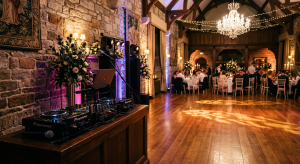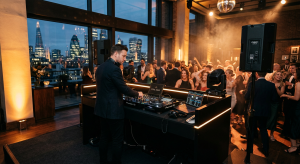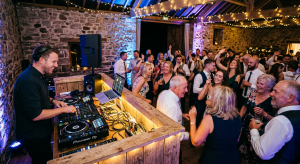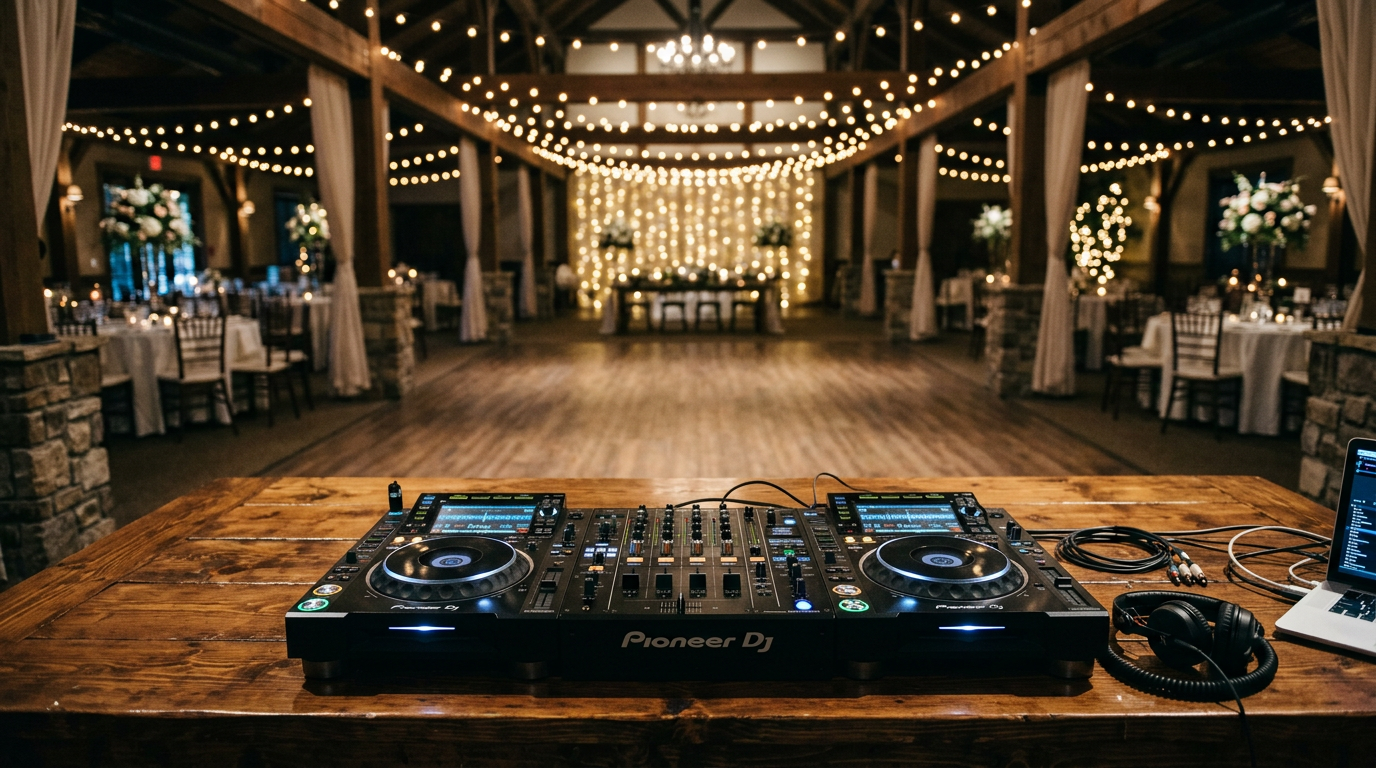
A Glasgow couple usually notices the difference between a polished wedding DJ and a risky booking at the same point – the transition from speeches to first dance. If the room has dead spots, the mic handling is clumsy, or the DJ cannot steer mixed-age guests from background music into a full dancefloor, the problem is already public. That is why couples searching for wedding dj glasgow services need to compare operating model as much as music taste.
Quick Summary
This comparison looks at five named professional options serving Glasgow and wider Scotland, using one practical lens: how the DJ service is delivered. That matters more than a long feature list because weddings fail operationally before they fail musically.
- Solo specialists suit couples who want one clear point of contact
- Team-based operators fit larger weddings and MC-led timelines
- Niche-style DJs work best when music identity is the brief, not an afterthought
- Pricing only tells part of the story – planning process and event fit matter more
- Reliability checks should cover insurance, testing, guest capacity and planning tools
Table of Contents
- Buying Guide / How to Choose
- 1. Marty The DJ
- Low annual volume can mean tighter personal handling
- 2. Colin Bell – Wedding & Party DJ
- A strong music identity narrows the right-fit audience
- 3. Wedding DJ Scotland
- Team capacity helps when the wedding runs like a production
- 4. Scotland’s Party DJ
- Planning tools matter most when the couple wants structure
- 5. Fresh Entertainments
- Broader geographic coverage can simplify regional venue plans
- The right choice depends on what your wedding is asking the DJ to carry
- Recommended Reads
Buying Guide / How to Choose
The useful question is not “who has the most features?”. It is how the service is delivered on the day, because that determines planning depth, resilience if timings move, and whether the DJ is really acting as background supplier or de facto evening host.
For this comparison, the dividing line is service delivery model. The five options sit across four categories:
- Solo personalised operator – one named DJ handles enquiry, planning and performance. Best when couples want consistency and direct communication. Less suited to buyers who want a broader bench of staff.
- Solo style-led operator – one named DJ, but the buying reason is a specific music identity rather than all-round wedding coverage. Strong if the crowd shares that taste. Riskier if the guest list is mixed.
- Team-based wedding production – a company structure with multiple DJs and MC support. Better for larger guest counts and formal running orders. Not the same thing as a boutique one-person brief.
- Multi-region entertainment company – broader area coverage and wedding entertainment positioning across regions. Useful when logistics matter, but couples should check who exactly performs the booking.
That lens is more revealing than a package checklist. A solo personalised operator can feel more joined-up because the same person hears every planning change. A team-based wedding production can cope better when the schedule is complex, especially if the DJ is also expected to manage intros, room flow and announcements.
What to check today:
- Who is the named performer? If that is unclear, ask before paying any booking fee.
- How much guest capacity is stated? Capacity tells you whether the operator has thought in practical event terms.
- What planning system exists? A planning app or structured request process usually signals a repeatable workflow, not just enthusiasm.
- Which reliability markers are published? For Scottish weddings, insurance and portable appliance testing are basic checks, not premium extras. A broader technical checklist is covered in this guide to the technical requirements behind a reliable wedding DJ setup.
Practical rule: If your wedding needs the DJ to manage transitions, microphones and room pacing, buy for delivery model first and music second. The playlist only matters once the event is under control.
Couples also need to separate published pricing from total event fit. A lower listed package can still become the wrong buy if the format does not match your venue, your guest count or the role you need the DJ to play. If cost planning is still fuzzy, this breakdown of variables determining your professional wedding DJ cost in 2026 is the better next step.
1. Marty The DJ
A couple who want one person to handle the brief from first call to last song usually end up shortlisting this sort of setup. Marty The DJ fits the solo personalised operator model, which means the attraction is continuity rather than scale.

The published facts give a fairly clear picture of how the service works. Its own FAQ states £10 million Public Liability Insurance and PAT certification, which tells you the reliability basics are documented rather than implied. Its own site also says bookings are limited to a maximum of 10 to 15 weddings per year. That is not automatically “better”, but it does suggest a deliberately narrow workload, which can matter if you want detailed pre-event handling rather than a high-volume pipeline. Published pricing lists an evening reception package at £800 within a 20-mile radius of Glasgow, plus a specialised Loch Lomond evening package at £600.
Low annual volume can mean tighter personal handling
The useful reading of that low annual volume is operational, not romantic. Fewer weddings usually means fewer moving parts, fewer handovers, and less chance that your planning notes disappear into a shared inbox. For couples with a venue timeline that needs active handling – speeches, first dance, cake cut, parent dances and a late shift in music age profile – I would take this seriously.
The constraint is just as obvious. A cap of 10 to 15 weddings per year means availability could disappear quickly, and it also tells some readers this is not the right option if they want the reassurance of a team structure behind the booking. There is also no published guest-capacity figure in the verified facts, so larger weddings should ask direct questions about room size, sound coverage and backup arrangements before treating it as a fit.
The right time to buy this is when direct contact with the named DJ matters more than menu-like package breadth.
Pros
– Published insurance and PAT information
– Clear, named pricing for key package types
– Lower annual booking volume suggests a more personal workflow
Cons
– Annual booking cap may limit availability
– No verified guest-capacity figure in the available facts
– Less suited to couples who prefer a team-backed structure
2. Colin Bell – Wedding & Party DJ
By contrast, some couples are not buying a generalist at all. They want the music taste to be the point. Colin Bell – Wedding & Party DJ follows the solo style-led operator model, aimed at buyers drawn to an Ibiza-style mix of house, trance and techno.
That distinction matters because style-led wedding DJs are not just choosing tracks differently – they are shaping the whole energy curve of the night around a narrower musical identity. According to its own wedding page, the standard wedding reception package is £750 for five hours from 7:00 PM to midnight. Its own party page lists £400 for a five-hour non-wedding party package within a 15-mile radius of Glasgow. The bookings page also states a 4.9 out of 5 rating from 49 Facebook reviews.
A strong music identity narrows the right-fit audience
The attraction here is clarity. You are not trying to infer whether the DJ really understands dance music-led weddings. The positioning tells you plainly. For couples whose friends would rather stay on the floor for a sustained house set than hear a broad wedding sweep, this can be exactly right. Shortlists for [wedding djs scotland] often blur all styles together; that is a mistake when the crowd is genre-conscious.
But music identity cuts both ways. A style-led operator is easiest to justify when the couple and the guest list broadly agree on what the night should feel like. If the room needs heavy cross-generational balancing – older relatives early, chart crossover later, specialist dance material after that – I would pause and test how flexible the brief can be without losing the reason you shortlisted this option in the first place.
Buy this when your wedding is musically opinionated and you want the DJ’s specialism to shape the evening rather than sit quietly behind it.
Pros
– Clear specialism in Ibiza-style music
– Published five-hour wedding pricing
– Public review score and volume are stated on its own site
Cons
– Niche style may not suit a mixed-age mainstream crowd
– Verified facts do not state planning tools or operational process
– Package timings may need checking against longer receptions
3. Wedding DJ Scotland
The trigger for choosing a team setup is usually scale. Once the guest list rises and the running order gets formal, couples often stop shopping for a DJ and start shopping for an entertainment operation. Wedding DJ Scotland fits the team-based wedding production model.
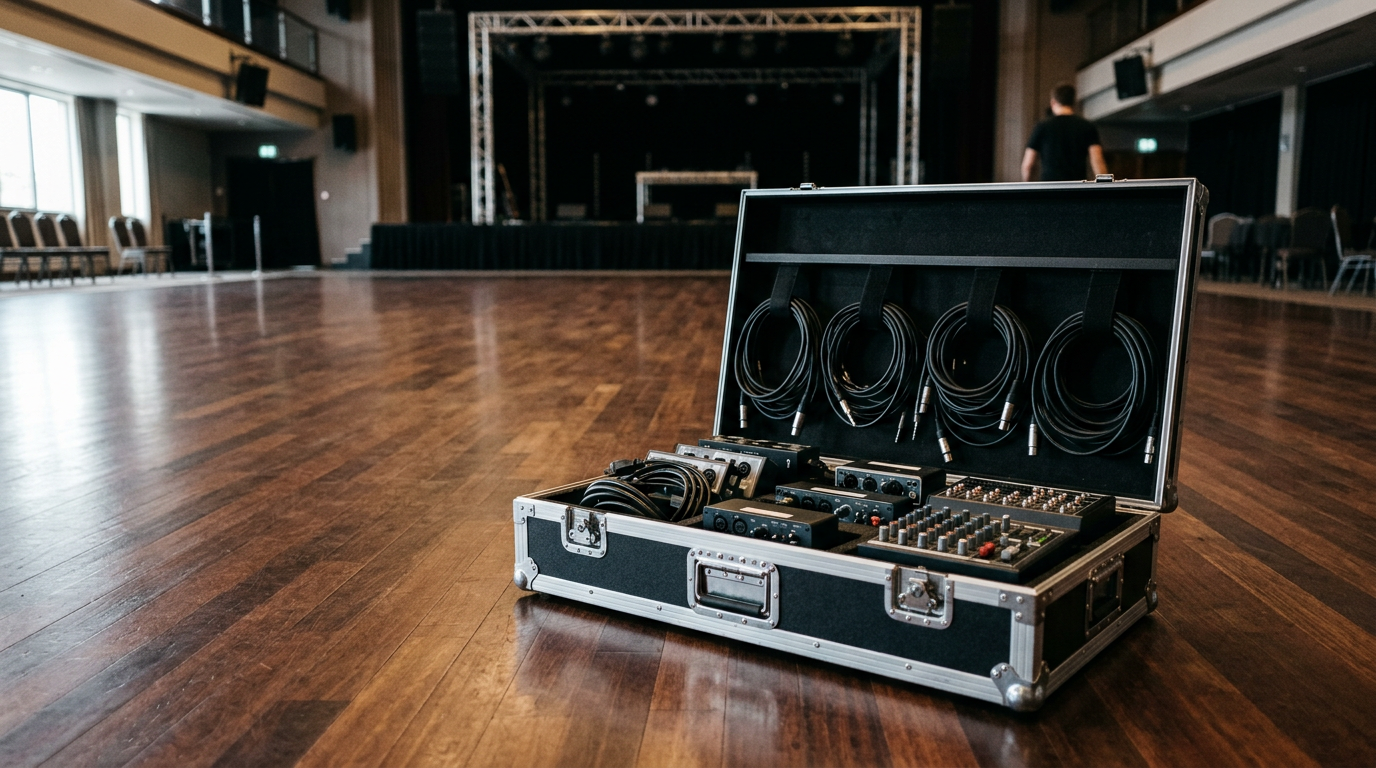
The verified details support that reading. Its own about page says the business features a team of master of ceremonies and professional DJs with over 25 years of experience. Its own package page lists a Bronze Package designed for up to 130 guests and a Silver Package designed for up to 170 guests. Trustpilot shows a 4.5 out of 5 TrustScore based on 14 reviews. Those facts do not tell you everything, but they do show a service built around structured package tiers and larger-room planning.
Team capacity helps when the wedding runs like a production
What changes with a team-based wedding production model is not just staffing. It is process. Capacity thresholds suggest the operator has thought about room size, gear scale and crowd management in practical terms. MC involvement also matters more than many couples realise. Once one supplier is handling announcements, pacing and floor-building, the evening tends to feel more joined-up.
This can be a strong fit for venue managers and planners who want fewer unknowns. It also suits weddings where the DJ is expected to be visible as an organiser, not just audible as music. If your event includes several formal moments, compare that expectation with what is covered in these essential factors to consider for wedding DJ hire in 2026.
The trade-off is that a team model does not automatically deliver the same one-person continuity some couples want. If your priority is building the whole brief around one named DJ’s judgement and taste, check exactly who handles planning and who performs on the night. That point matters more here than an attractive package title.
Choose this route when guest count, formal structure and MC support matter more than having a boutique one-person booking relationship.
Pros
– Published guest-capacity guidance for package tiers
– Team plus MC structure suits formal wedding timelines
– Independent Trustpilot review score is available
Cons
– Named performer may need clarifying before booking
– Verified facts do not include pricing in the supplied sources
– Less appealing for couples wanting a single-DJ boutique experience
4. Scotland’s Party DJ
One of the most common mistakes couples make is assuming all wedding DJs plan in roughly the same way. They do not. Scotland’s Party DJ points to a more structured workflow, still within a solo personalised operator model, but with stronger emphasis on pre-event planning tools.
Its FAQ says evening packages start from £995, with pricing depending on venue accessibility and travel distance. The same FAQ states a booking fee of £200 for evening packages and 20% of the total fee for half and full-day packages. It also says clients get a customised online wedding planning and music request app. According to its own about page, the compact P.A. system is described as capable of handling events from 20 to over 150 guests.
Planning tools matter most when the couple wants structure
That planning app is the mechanism worth noticing. A proper request and planning workflow reduces the usual late-stage mess: songs sent by text, family requests delivered second-hand, and timeline edits scattered across email threads. For organised couples, that matters. For planners coordinating several suppliers, it matters even more.
The published guest-range figure also gives this entry something many solo operators do not state clearly – an event size frame. That helps couples avoid paying for either too little system or unnecessary overkill. The commercial structure is firmer too. A stated booking fee makes the commitment process more explicit than operators who stay vague until the quote stage.
What would make me hesitate is price sensitivity at the earlier stage of planning. Starting from £995 may be perfectly justified for some weddings, but it means buyers need to be realistic about budget before investing time in the shortlist. Accessibility and travel dependence also mean the quoted starting point is only the start, not the finished event cost.
This option makes the most sense when you want a planning-led booking process and the wedding needs both structure and capacity rather than the lowest visible starting figure.
Pros
– Published planning and music request app
– Stated guest-range capability from 20 to over 150 guests
– Booking fee structure is clearly published
Cons
– Starting price is higher than some published alternatives
– Final cost varies with access and travel
– Verified facts do not state insurance or PAT in the supplied sources
5. Fresh Entertainments
What actually happens here is different again: the buyer is not selecting a narrowly local one-person service first, but a wider wedding entertainment company operating across several Scottish regions. Fresh Entertainments fits the multi-region entertainment company model.
The verified information is lighter than for some others, but enough is known to place it. It is described as a wedding entertainment and DJ company operating across Glasgow, Ayrshire, Edinburgh and other areas of Scotland. That coverage can simplify shortlisting for couples planning outside one tight city radius, especially when venue, family and accommodation logistics stretch across regions.
Broader geographic coverage can simplify regional venue plans
The benefit of a multi-region entertainment company is straightforward: broader coverage can reduce friction when the wedding is not neatly local. This matters for destination-style Scottish weddings within the domestic market too – where one side of the family is in Glasgow, the venue may be elsewhere, and couples want an operator already structured to travel across service areas.
Still, this entry has the biggest information gap in the verified set. There is no published pricing, no stated capacity number, and no sourced planning-process detail in the material supplied here. That does not make it weak. It means the burden shifts back to the buyer. Ask who the named DJ will be, what the planning workflow looks like, and whether there are any service-area effects on cost or timing.
I would keep this on the shortlist when geography is the problem to solve first. I would move it down if the decision depends on transparent package mechanics before the first enquiry.
Shortlist it when regional coverage is central to the booking and you are prepared to verify the delivery detail yourself.
Pros
– Broad Scottish operating area is clearly stated
– Suits weddings spanning multiple regions
– Positioned as a wedding entertainment company, not only a general party service
Cons
– No verified pricing in the supplied facts
– No verified capacity figure in the supplied facts
– Planning process and reliability markers need direct checking
The right choice depends on what your wedding is asking the DJ to carry
For solo personalised operator bookings, the decision comes down to how much you value one named contact and how formal the event is. Marty The DJ suits couples who want a low-volume, direct-handling setup and are comfortable checking capacity details themselves. Scotland’s Party DJ is the better fit where planning structure, guest-range clarity and a defined workflow matter more than chasing the lowest starting number.
With a solo style-led operator, Colin Bell – Wedding & Party DJ only really shines when the wedding’s music identity is deliberate. That is not a flaw. It is the point. Where the guest list expects broad wedding coverage first and specialist dance music second, a more general wedding brief may be safer.
A team-based wedding production setup such as Wedding DJ Scotland fits larger or more formal receptions, especially when MC support and published guest thresholds matter. Couples comparing timeline-heavy receptions may also find it useful to read how UK wedding DJ packages are compared for 2026 before making the final call.
The multi-region entertainment company route suits logistics-led decisions. Fresh Entertainments becomes more attractive when venue geography is awkward and less attractive when you need detailed package transparency up front.
Practical rule: When two DJs seem equally appealing, pick the one whose published process best matches your wedding’s complexity. Clear handling beats vague flexibility every time.
For readers still balancing entertainment alongside other suppliers, the wider event-planning context in how to source reliable professional event hire in 2026 is worth reading, especially if the DJ is only one part of a multi-supplier reception plan.